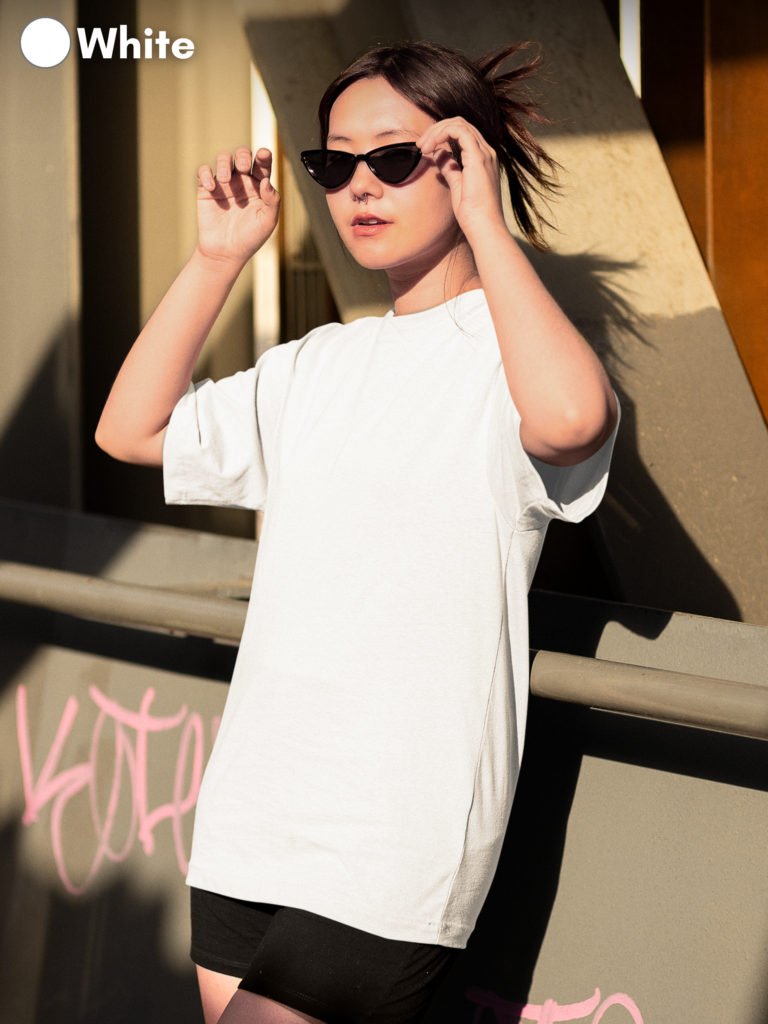
white T shirt outfit ideas for men: White T shirt outfit ideas for men are useful because the same plain tee can look relaxed, tidy or deliberately streetwear-focused depending on the trousers and layers. A white top gives the rest of the outfit a neutral starting point, but fabric opacity, collar shape and hem length still matter. These twelve combinations are designed for India—from warm casual days to mild winter layering—without treating any body type, age or budget as a fixed rule.
This article is an educational styling and buying guide, not a claim that every Namakool product has the same material, cut, thickness or colour. Start by looking at the men’s range, women’s range or online shop; compare each listing with your own needs. The examples below are flexible starting points rather than fashion rules, and no garment can guarantee a particular result without its individual specifications.
White T-shirt with straight blue jeans

A white crew-neck tee and mid-blue straight jeans is a familiar combination because the colour contrast is clear and the pieces are easy to repeat. Aim for a tee that sits comfortably at the shoulders and does not pull across the chest.
Practical option: Choose low-profile white or neutral trainers for a simple weekend look. A brown belt can add warmth, while a dark belt creates a stronger boundary if the tee is tucked in.
What not to assume: Very distressed denim and heavily printed shoes can make a minimal outfit look busy. That is a style choice, not an error, but choose intentionally if you want a clean appearance.
Indian everyday example: Use this outfit for cinema plans, college, errands or a relaxed meeting with friends. In hot weather, examine fabric breathability and the weight of the jeans.
Decision method: A good product comparison identifies the trade-off instead of promising a winner. Ask what you gain, what you give up, and which difference matters for the people and places involved. This keeps style advice practical rather than based on rigid rules.
Before purchasing: Colour checkpoint: assess the garment beside your existing shoes and trousers, ideally in daylight. Product photography, screen brightness and indoor lighting may affect how a colour appears.
White T-shirt with black trousers

Black straight-leg trousers create an easy monochrome contrast, suitable for smart-casual events with flexible dress codes. A thicker-looking tee may appear more structured, but you should check the fabric details rather than assuming its weight.
Practical option: Try black leather-look sneakers or understated loafers and keep the shirt hem neat. A watch or simple overshirt can make the outfit more deliberate without needing many accessories.
What not to assume: A tight white tee with very wide trousers can create a different balance from a relaxed tee. Neither is universally correct; check proportions in the mirror and while seated.
Indian everyday example: This combination works for casual offices where T-shirts are accepted, dinner outings and travel. Confirm the workplace dress code before using it for a formal meeting.
Decision method: Start with your current wardrobe rather than a perfect catalogue photograph. Try the garment against the trousers, shoes and outer layer you already wear, then decide whether it solves a practical need or merely duplicates another purchase.
Before purchasing: Care checkpoint: read the actual garment label and product instructions before the first wash. Fibre composition, colour and applied decoration can change which treatments are suitable even within the same clothing category.
White T-shirt with beige chinos

Beige chinos soften the contrast and create an approachable warm-neutral palette. The outfit can appear more polished if the trousers are pressed and the tee collar stays smooth rather than stretched.
Practical option: Pair with tan, brown or white shoes. A navy overshirt provides a third colour that remains easy to coordinate with the warm trousers and light top.
What not to assume: Beige shades range from pale stone to deeper khaki. Put them beside your white tee in daylight to check whether the combination has enough separation for your preference.
Indian everyday example: Use this look for lunch, casual client interactions or family outings. On a dusty commute, light trousers may need more frequent care.
Decision method: Size letters are not a complete measurement system. Review the exact garment chart, distinguish body measurements from laid-flat dimensions, and leave enough ease for movement. If the product description does not specify a feature, do not assume it has that feature.
Before purchasing: Practical checkpoint: photograph the item in natural indirect light if you are comparing colours or proportions at home. A close-up picture can reveal seam position and fabric texture, but it cannot prove a specific fibre grade or durability claim.
White T-shirt with olive cargo pants

Olive cargos bring texture, pockets and a relaxed silhouette. A white T-shirt balances those details without competing for attention. The most useful proportion check is how the tee hem meets the trouser waistband.
Practical option: Try a slightly boxy tee with tapered or straight cargos and simple trainers. A black crossbody can repeat the darker accents without adding a loud colour.
What not to assume: Overfilled cargo pockets can distort the trouser shape and make walking uncomfortable. Use a bag when carrying heavier belongings.
Indian everyday example: This is a practical choice for college, concerts and weekend walks. If temperatures are high, consider how heavy cargo fabric feels outdoors.
Decision method: Before judging a style, check it in more than one setting. Standing in front of a mirror is different from sitting at a desk, walking in humid weather, carrying a backpack or travelling with a jacket. Comfort over several hours is useful information.
Before purchasing: Shopping checkpoint: match the intended silhouette, material information and care requirements to one real-use scenario. If any of these details is missing online, consider asking the seller rather than guessing.
White T-shirt under a denim jacket

A white tee gives clear contrast beneath blue denim and keeps the neckline clean. Choose a jacket with enough shoulder ease to allow arm movement over the T-shirt.
Practical option: Wear dark jeans for a tonal denim look or beige trousers to break up the blue. Leave the jacket open for airflow when the weather allows.
What not to assume: If the T-shirt bunches under the jacket at the upper arm, try a different sleeve shape instead of immediately buying a larger jacket.
Indian everyday example: Use this formula in transitional weather, evening travel and casual social plans. It can be adapted by removing the jacket during warmer afternoons.
Decision method: Consider laundry and repeat wear as part of a purchase decision. A dramatic colour or structure may look attractive at first, but its maintenance must work with your routine. Follow the care label rather than applying a universal washing temperature.
Before purchasing: Fit checkpoint: move your arms, sit down and walk across the room in the intended layers. A garment that looks neat while standing can feel different at the shoulders, neck, waist or hips during ordinary activity.
Related Namakool reading: Explore an additional fit, fabric or outfit guide to understand a different part of the buying decision. The details of the individual garment still control the final choice.
White T-shirt with relaxed grey joggers

Grey joggers and a white tee make a soft neutral outfit, especially when both garments have deliberate proportions. The look can feel put-together rather than purely gym-focused if seams, hems and shoes are tidy.
Practical option: Try a straight or gently tapered jogger with clean trainers. A navy cap or charcoal hoodie can introduce one darker piece for depth.
What not to assume: Do not assume joggers are acceptable at all workplaces or restaurants. Dress codes differ, and a very oversized tee can appear more casual than intended.
Indian everyday example: This works well for short journeys, study days or travel where sitting comfort matters. Look for practical pocket closures for phone and wallet.
Decision method: Think about how one detail changes the complete outfit. Hem length, trouser rise, sleeve opening, fabric weight and colour contrast all interact. Change one element at a time, so you can tell which adjustment actually improved the result.
Before purchasing: Value checkpoint: calculate how frequently you expect to wear the piece and how well it coordinates with what you own. A versatile top worn repeatedly can be a better choice than a fashionable one that needs several new purchases.
White T-shirt with navy overshirt

A navy overshirt frames the white neckline and offers an easy extra layer. Wear the overshirt open for a relaxed look or partly closed for a more structured outline.
Practical option: Use stone chinos, straight jeans or charcoal trousers. Choose shoes that repeat one existing colour rather than adding several competing shades.
What not to assume: If the overshirt and tee are both long, the hems may overlap awkwardly. Compare lengths while standing and seated before deciding which fit works best.
Indian everyday example: This outfit suits café visits and casual office days with variable indoor temperatures. Choose an overshirt fabric appropriate to the season.
Decision method: A good product comparison identifies the trade-off instead of promising a winner. Ask what you gain, what you give up, and which difference matters for the people and places involved. This keeps style advice practical rather than based on rigid rules.
Before purchasing: Colour checkpoint: assess the garment beside your existing shoes and trousers, ideally in daylight. Product photography, screen brightness and indoor lighting may affect how a colour appears.
White T-shirt with brown trousers

Chocolate and coffee-brown trousers give white a warmer foundation than black or navy. This makes a good alternative for someone building a small capsule wardrobe with versatile neutrals.
Practical option: Try off-white sneakers or brown loafers. A sand jacket can keep the palette soft, while a dark belt creates a sharper line at the waist.
What not to assume: Brown tones vary widely. Compare the colour with footwear to avoid a near-match that looks accidental if you prefer coordinated outfits.
Indian everyday example: Use this look for weekend lunches and relaxed evening outings. It is easy to adapt across seasons with a lightweight layer.
Decision method: Start with your current wardrobe rather than a perfect catalogue photograph. Try the garment against the trousers, shoes and outer layer you already wear, then decide whether it solves a practical need or merely duplicates another purchase.
Before purchasing: Care checkpoint: read the actual garment label and product instructions before the first wash. Fibre composition, colour and applied decoration can change which treatments are suitable even within the same clothing category.
White oversized tee with wide-leg denim

An oversized white T-shirt and wide denim creates a deliberate streetwear silhouette. Rather than sizing up randomly, check whether the tee is patterned with a broader body, lower shoulder and proportionate sleeves.
Practical option: Choose jeans with a predictable waist fit and sneakers with enough visual weight to balance the outfit. A partial front tuck can adjust the hem without changing the entire garment.
What not to assume: A very long oversized hem may hide pockets and shorten the visible leg line. Experiment with sleeve rolling or a tuck only if comfortable.
Indian everyday example: This is a relaxed college and streetwear option, but not necessarily ideal under a close-fitting blazer or jacket because of its volume.
Decision method: Size letters are not a complete measurement system. Review the exact garment chart, distinguish body measurements from laid-flat dimensions, and leave enough ease for movement. If the product description does not specify a feature, do not assume it has that feature.
Before purchasing: Practical checkpoint: photograph the item in natural indirect light if you are comparing colours or proportions at home. A close-up picture can reveal seam position and fabric texture, but it cannot prove a specific fibre grade or durability claim.
White T-shirt under a black bomber jacket

A black bomber adds shape and contrast while the white tee keeps the centre of the outfit light. Decide whether you want a snug bomber silhouette or a more relaxed version and check the jacket's hem.
Practical option: Wear straight denim or charcoal trousers and avoid overstuffing jacket pockets. A bomber that ends around the waist can interact neatly with a longer tee.
What not to assume: Some bomber jackets have heavy ribbing that rides up when seated. Test this movement along with how the tee neckline sits beneath the collar.
Indian everyday example: Choose this for evening outings and cooler weather. A bomber is a style layer, not a guaranteed rain or winter-protection garment.
Decision method: Before judging a style, check it in more than one setting. Standing in front of a mirror is different from sitting at a desk, walking in humid weather, carrying a backpack or travelling with a jacket. Comfort over several hours is useful information.
Before purchasing: Shopping checkpoint: match the intended silhouette, material information and care requirements to one real-use scenario. If any of these details is missing online, consider asking the seller rather than guessing.
More on clothing care: GINETEX care-symbol reference explains washing, drying and ironing labels. Follow the specific symbols shown on your own garment.
White T-shirt with shorts for warm weather

A white tee with navy, olive or tan shorts creates an easy hot-weather outfit. Shorts length and fabric determine whether the look is sporty, casual or more polished.
Practical option: Choose breathable footwear appropriate to the setting, and keep socks deliberate if wearing trainers. A slightly relaxed tee can provide comfort without needing excess length.
What not to assume: Very thin white fabric may be more see-through under strong light. Check opacity and fit rather than assuming all white T-shirts behave alike.
Indian everyday example: This look suits home, casual walks, holidays and many outdoor weekends. For strong sunlight, clothing choices complement—but do not replace—appropriate sun protection.
Decision method: Consider laundry and repeat wear as part of a purchase decision. A dramatic colour or structure may look attractive at first, but its maintenance must work with your routine. Follow the care label rather than applying a universal washing temperature.
Before purchasing: Fit checkpoint: move your arms, sit down and walk across the room in the intended layers. A garment that looks neat while standing can feel different at the shoulders, neck, waist or hips during ordinary activity.
White T-shirt outfit FAQs and buying checklist

Can white tees work in winter? Yes, as a base layer. Should you tuck them? Only if the trousers and hem suit the look. Are white tees transparent? Some are; check the fabric. Do sneakers have to be white? No. Are oversized fits only for tall people? No.
Practical option: The most useful first purchase is a white tee with a neckline and body length you enjoy wearing. Then build combinations using jeans, chinos, cargos and jackets already in the wardrobe.
What not to assume: Avoid using one colour as a reason to ignore fit, opacity or care. White garments may show stains more easily, and the specific label should guide stain treatment and washing.
Indian everyday example: Try each outfit in the lighting and setting where you will wear it. A simple photograph can help compare proportions without turning styling into a rigid list of rules.
Decision method: Think about how one detail changes the complete outfit. Hem length, trouser rise, sleeve opening, fabric weight and colour contrast all interact. Change one element at a time, so you can tell which adjustment actually improved the result.
Before purchasing: Value checkpoint: calculate how frequently you expect to wear the piece and how well it coordinates with what you own. A versatile top worn repeatedly can be a better choice than a fashionable one that needs several new purchases.
Helpful next steps: Compare a garment you already own against the dimensions and fabric information of a new purchase. Choose one practical improvement—comfort, style, care, fit or utility—and make sure the listing supports it. Repeating a simple, comfortable outfit is often more useful than chasing every seasonal change.
Shop Namakool: Browse MEN and WOMEN, or explore the full store to compare currently available products. Read the item-specific colour selection, size chart, price, material, care instructions and return terms before ordering.
Further reading: Another Namakool educational article and Textile Exchange provide additional fashion and material context. These references do not verify the characteristics of a specific product.