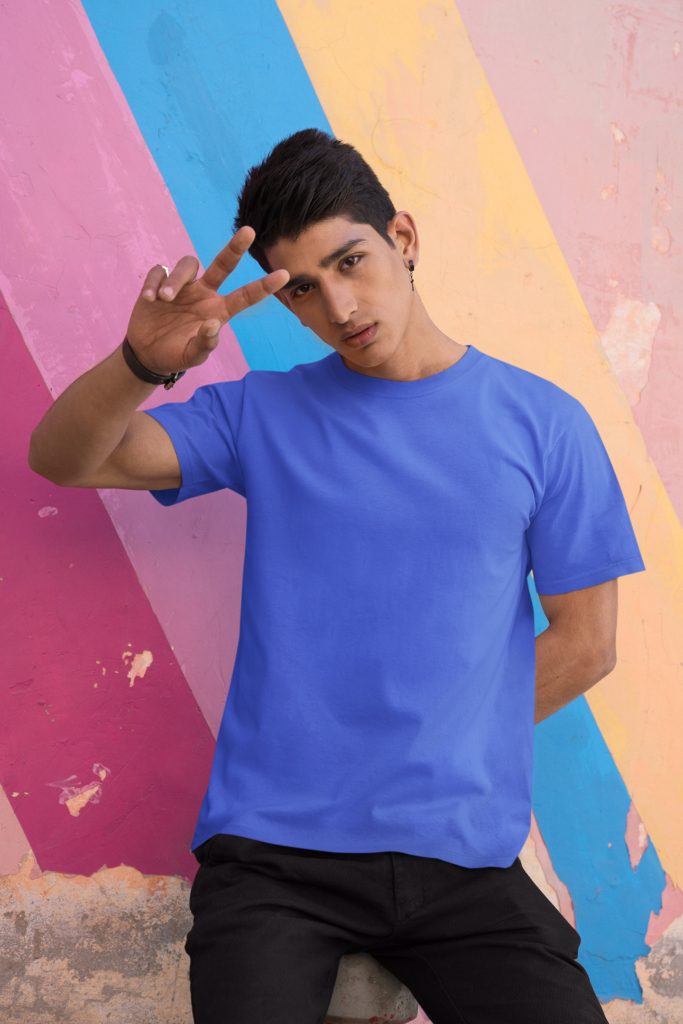
Blue T-shirt combinations for men can be quiet, bright or somewhere between the two. The easiest starting point is to decide whether the top should blend into the outfit or become its main colour. Royal blue offers a stronger accent, while navy can act as a familiar base. You do not need to replace all your jeans and shoes to try either direction.
Vivid blues feature in Who What Wear’s fall 2026 colour report. This guide translates that broader fashion interest into everyday menswear choices. Product shades called royal blue, cobalt or electric blue are not guaranteed to be identical, so judge the actual garment instead of the label alone.
The images show existing Namakool products as styling references. Availability, fabric, measurements and price belong to the current product listing. Use the combinations below with what you own first, then shop only for a piece that has a clear role.
Royal blue with black: build one clear colour focus
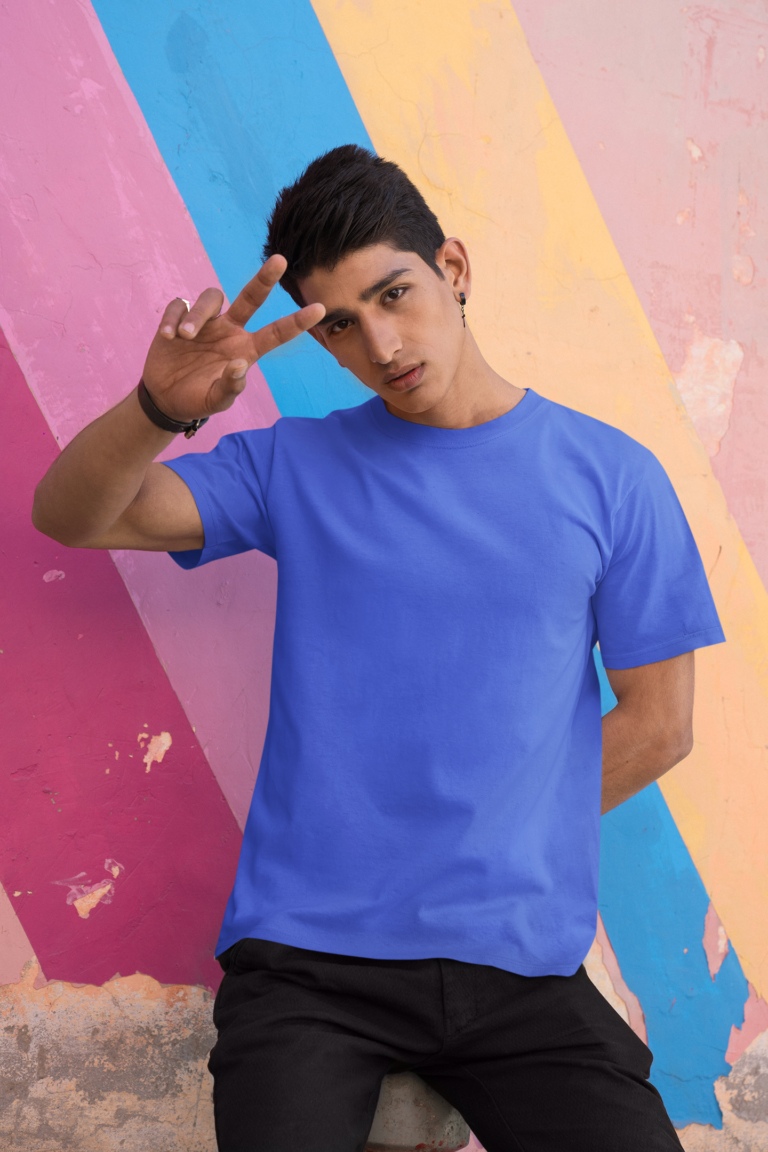
Royal blue and black create a simple combination because the top provides the colour while the bottom keeps the palette contained. You can begin with the same black jeans or trousers you normally wear with a white tee. Changing only the top makes it easier to judge whether you like the new shade without confusing the result with several other changes.
Check the blue in daylight. A screen can make it appear lighter or more saturated than expected, and a bright background in a product photograph may change your impression. Look for several views of the garment. If you are trying to match something you already own, remember that a shared colour name is not proof of an exact match across different fabrics.
A round-neck tee keeps the neckline straightforward. Try the garment with your usual trouser rise and see where the hem finishes. A longer tee can make the torso area appear more extended, while a shorter one reveals more of the waistband. Choose the shape you enjoy rather than treating a trend as a rule that everyone must wear the same proportions.
For a daytime outfit, white or light neutral trainers can add contrast at the ground. Black shoes keep the palette darker. Neither choice needs to repeat the blue. If the outfit feels too stark, try charcoal trousers rather than introducing several new colours. Small changes within the neutral base can alter the result without taking attention away from the tee.
An open black shirt or lightweight jacket can reduce the amount of visible blue. This is useful if you like the colour but want a quieter overall impression. Check the shoulder room with the tee underneath and make sure the inner hem sits where you want it. You should still like the outfit when the outer layer is removed.
Before buying, imagine three uses for the tee: a casual lunch with jeans, a day out with trousers and an evening with an existing layer. If all three combinations work with your current shoes and bag, the colour is likely to be useful. If it needs a new item at every step, consider whether another shade or fit would integrate more easily. The goal is a colour you will wear, not a bright piece kept aside for a perfect occasion.
One useful final check is to photograph the outfit without adjusting every fold. This shows the combination closer to how it will appear during an ordinary day. If the colour feels right but the shape does not, change the garment fit rather than assuming blue itself is the problem.
Royal blue with light bottoms: soften the outfit
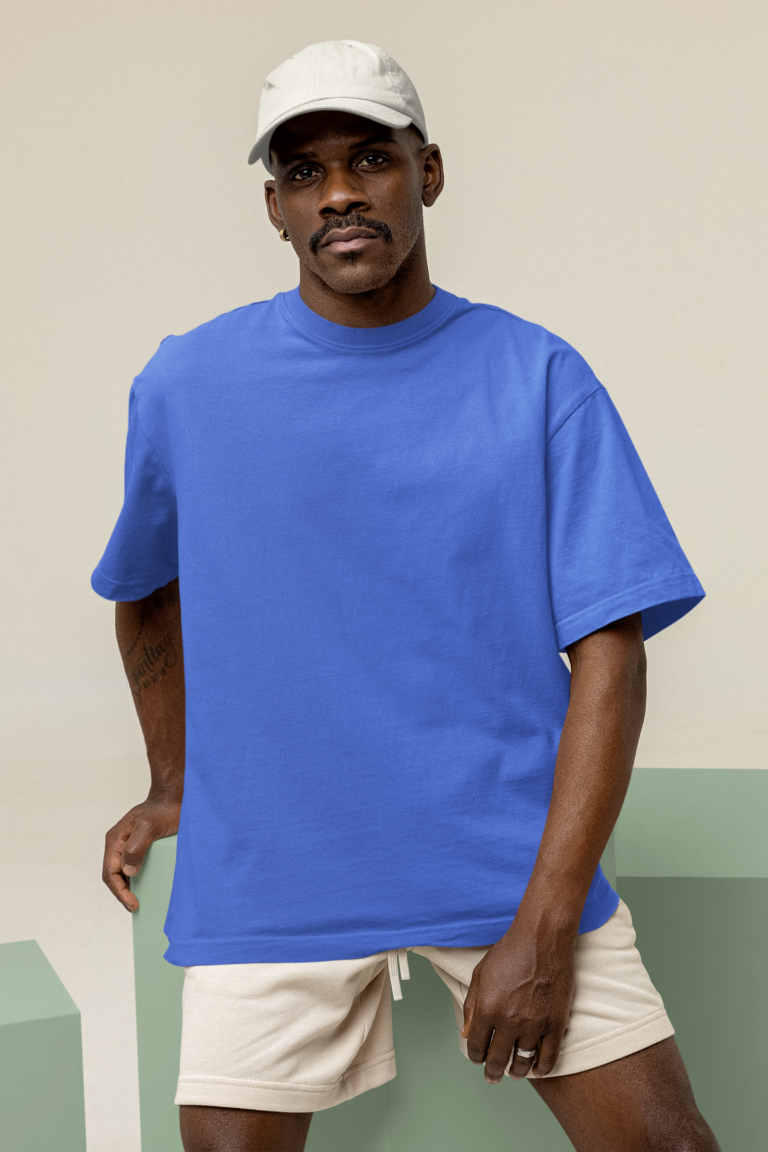
Light bottoms give royal blue a different setting. Instead of the strong contrast of black, beige, stone or off-white can make the outfit feel more open and casual. The reference uses shorts, but trousers can create the same colour relationship. Choose the garment type according to your activities and the temperature rather than copying the photograph exactly.
With shorts, compare the tee length and leg opening together. A long, roomy top can cover much of a short pair, which may or may not be the effect you want. Try moving and sitting to see how the pieces overlap. If you prefer more definition, a different top length may solve the issue without making either garment tight.
With light trousers, consider how practical the colour is for your day. A café visit and a dusty commute create different demands. If pale bottoms make you uncomfortable, use dark trousers and move the lighter shade into trainers or an overshirt. A styling idea should be adaptable enough to work with your actual routine.
Cream and bright white produce different contrasts. Cream can make the overall outfit feel warmer, while bright white may sharpen the separation from the blue. You can compare both using clothes you already own. Do not feel that your shoes, trousers and bag all need to share an identical shade of white; a little variation can be perfectly workable.
A relaxed tee can be a useful travel piece when its fabric and fit suit the conditions. Check the neckline, sleeve opening and how the material feels while seated. The colour does not tell you whether the tee is cool, warm or comfortable. Read the composition and care information separately from the styling decision.
For a small weekend wardrobe, try one blue tee with light trousers on the first day and dark jeans on another. Keep the shoes and bag the same if they suit both plans. This shows whether the new colour adds flexibility rather than demanding its own collection of accessories. Repeating the top is a practical test of usefulness, not a styling failure.
If you later add a second blue, give it a different role. A navy base or a lighter sky-blue tee may offer more variety than another almost-identical royal blue. Compare the shade with the rest of your wardrobe before ordering, and make sure the new item solves a need that the first tee does not already cover.
Make the look your own
Explore everyday tees, polos and casual layers at Namakool.
A blue polo: change the neckline, keep the palette simple
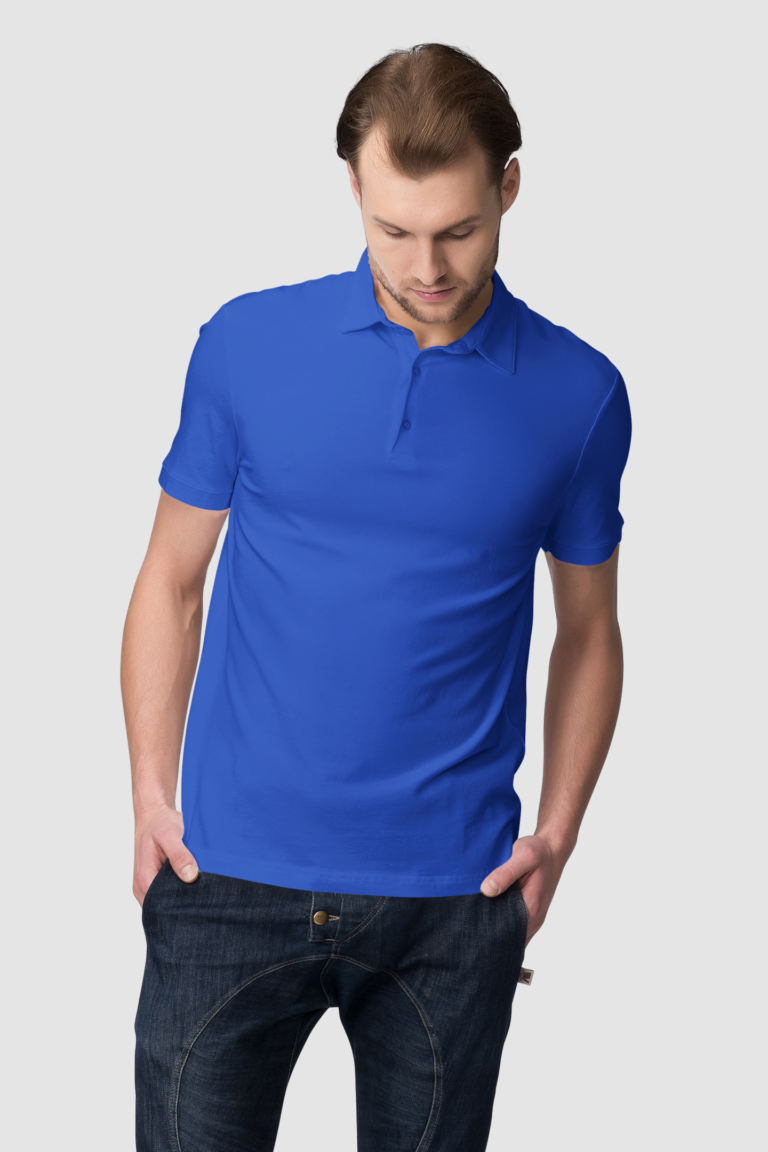
A blue polo gives you the same strong colour with a more structured neckline. It can work when you want a slightly neater casual outfit without moving to a woven shirt. The collar changes the mood, but the garment remains casual. Check any office or event dress requirements instead of assuming a polo is accepted everywhere.
Begin with dark jeans and comfortable shoes. This keeps the first outfit easy to assess. If you want a lighter combination, use beige trousers. Grey is another useful partner when black feels too strong and cream feels too bright. The top can stay the main colour while the rest of the outfit remains quiet.
Look closely at the collar and placket in the product images. Then compare the measurements with a polo you already enjoy wearing. A collar that looks perfect on a model may sit differently on another size or shoulder shape. The neckline should feel comfortable when you move, sit and turn, not only when arranged for a photograph.
Sleeve fit is equally important. Check that the opening and shoulder allow normal movement. A close sleeve may appeal visually but feel restrictive during a long day. A roomier sleeve can work well when the rest of the shape is considered. Focus on the fit you will enjoy wearing instead of assuming that a polo must always be slim.
Decide whether to tuck it based on the actual garment. A long polo may stay in place more easily, while a shorter one may be designed to sit outside the waistband. Fabric thickness also affects how much it bunches. Try both options with the trousers you intend to wear and look at the side as well as the front.
When adding a jacket, check the interaction between the two collars. A crowded neckline may be solved by leaving the jacket open or choosing a simpler outer shape. Do not keep rearranging a combination that feels uncomfortable just because the colours work. A crew-neck tee may be the better inner layer for that particular jacket, and the polo can serve another outfit.
Build the polo into two reliable combinations before adding accessories: one with denim, one with trousers. If those work, you have a clear reason to keep it in rotation. If they do not, identify whether the difficulty comes from the shade, collar or fit. Changing the right detail is more effective than buying another blue item without understanding what the first one needed.
Navy blue: use a darker base for layered outfits
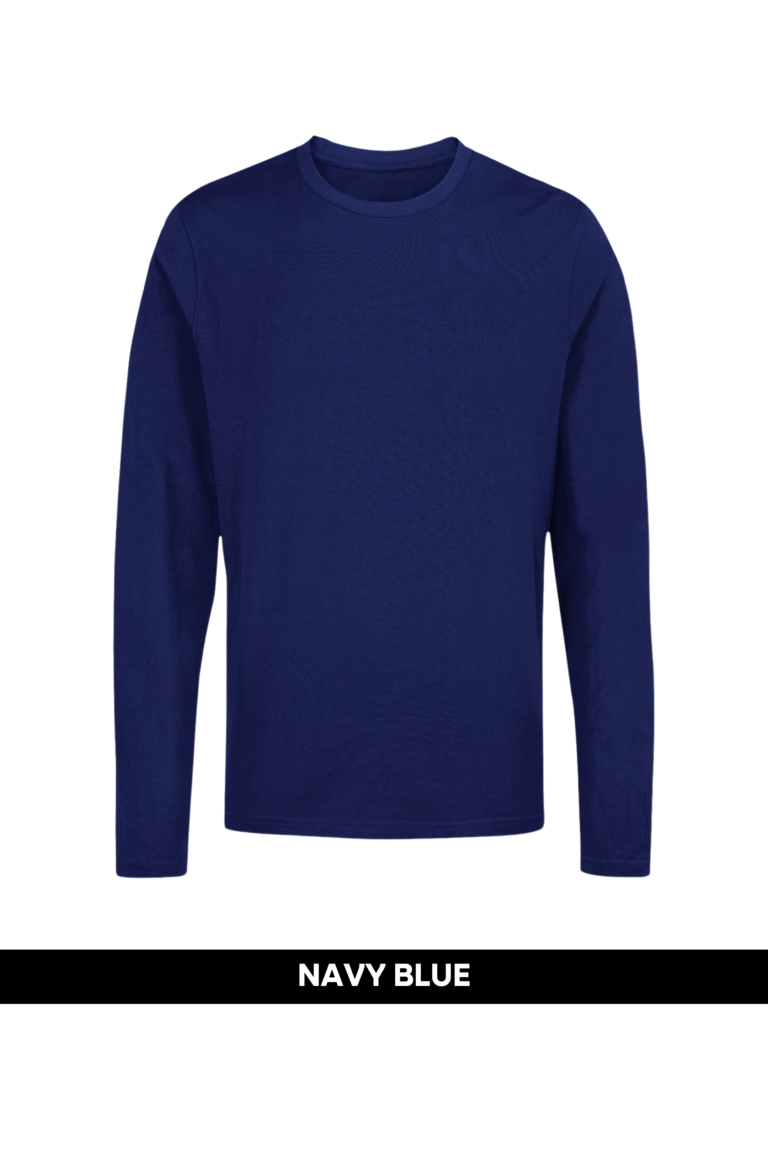
Navy offers a quieter alternative to royal blue. It can function as a neutral in many casual outfits, particularly if you already own beige, grey, olive or denim bottoms. The long-sleeve reference here illustrates the shade and garment type. It is not a promise of a particular warmth level; check the actual material and construction.
For a straightforward combination, wear navy with beige trousers and neutral shoes. The contrast makes the garments easy to distinguish. With grey bottoms, the outfit can feel more contained. Olive adds an earthy colour without making the palette especially bright. Choose the combination that fits your plans and the pieces you already have.
Navy with blue denim needs a little comparison. You can deliberately build a tonal outfit, or choose a jean wash that clearly differs from the top. An accidental near-match may bother you more than a strong contrast. View the pieces together in normal light and decide whether you like the relationship rather than relying on colour names.
A long-sleeve tee can work alone or under an open shirt, depending on the conditions. Check the wrist length, the amount of fabric at the elbows and how the sleeves behave while seated. If you push sleeves up during the day, make sure that is comfortable. Practical details often determine whether a basic becomes a favourite.
For layering, allow enough space in the outer garment. A shirt that works over a thin tee may pull over a more substantial one. Try the exact combination, reach forward and check the back. The colour relationship is only one part of whether the outfit succeeds. A comfortable navy base is more useful than a visually coordinated layer you cannot move in.
If your wardrobe is mostly dark, add a light element only when you want it. A white shoe or pale outer shirt can separate the outfit, but there is no requirement to break up every dark combination. Texture and shape can create interest as well. Decide what feels natural to your style rather than treating a formula as compulsory.
Navy also makes a useful comparison when shopping for brighter blue. Lay the two beside your regular trousers and ask which adds something new. You may find that navy covers most daily needs while royal blue serves as an occasional accent. That is a sensible division if it reflects what you actually enjoy wearing.
A blue hoodie: carry the colour into cooler conditions
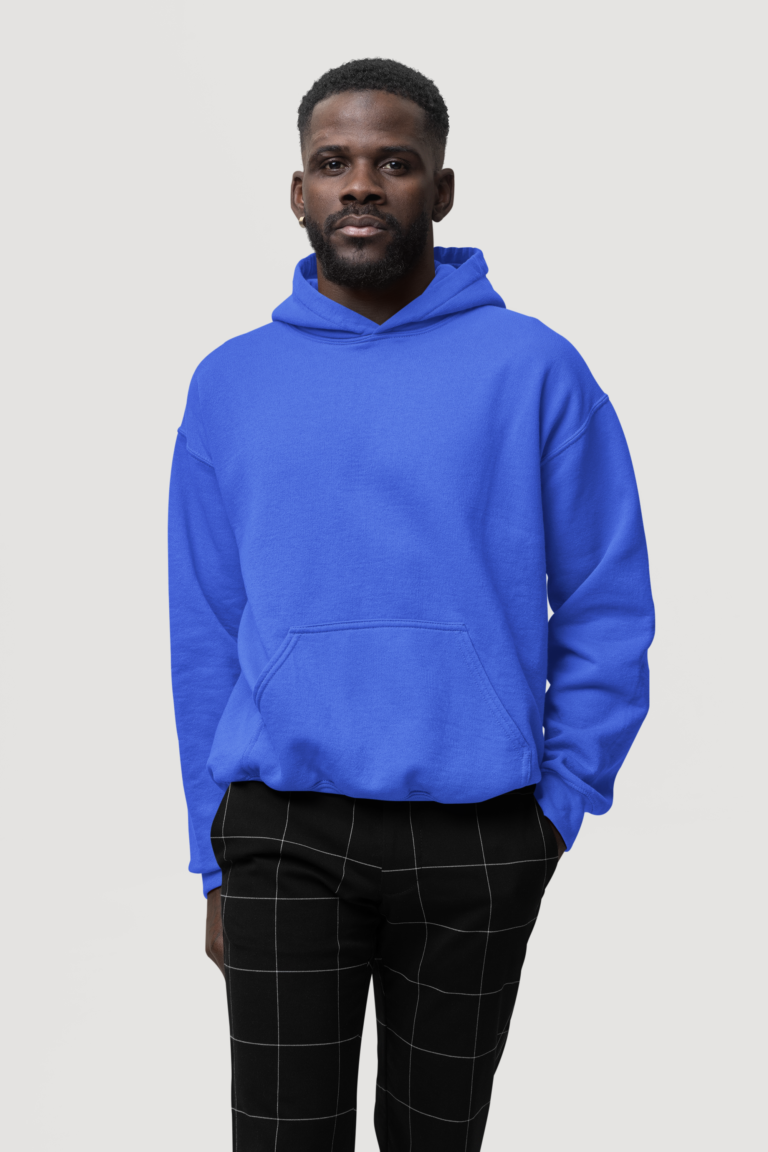
A blue hoodie lets the colour occupy more of the outfit and adds a different silhouette from a tee. Choose it for the garment’s usefulness as well as the shade. A bright blue layer can be an enjoyable change during cooler weather, but colour alone does not tell you how warm the fabric will feel.
Start with dark jeans or charcoal trousers. If your bottoms have a pattern, as in the reference, keep the rest of the outfit simple so you can judge the combination clearly. Plain bottoms are an equally good starting point. You do not need to copy the pattern to make the blue work.
Check body length, sleeve length and the amount of room around the shoulders. A hoodie may be labelled regular or oversized, but those labels do not specify every dimension. Compare the size chart with a hoodie you own. Think about whether you will wear a tee underneath and whether the outer layer needs to fit over both.
If you plan to add a jacket, test the hood and collar together. Some combinations create more bulk behind the neck than you prefer. Make sure the sleeves do not bind and that the jacket can move comfortably. Also check the outfit without the jacket, because a useful layer should not depend on remaining covered.
You can carry the blue theme through a small wardrobe without repeating the exact shade in every item. A navy tee and royal blue hoodie offer different roles, while neutral trousers connect them. Avoid assuming that two products called blue will form a matching set. If a matched look is important, confirm the specific shades and compare the fabrics.
Plan a realistic three-outfit rotation: a royal blue tee with black jeans, a polo with beige trousers and a hoodie with grey bottoms when needed. These are options, not a requirement to purchase three tops. Use the pieces you own and identify the one gap that would improve your week. The most useful colour update is often a single well-chosen garment.
Before ordering, review the listing’s current size availability, composition, care instructions and return information. The article’s images are references from the media collection. A strong blue can refresh your wardrobe, but the buying decision should still come down to fit, comfort and the number of outfits you can make without further purchases. That is how a trend-inspired choice becomes an everyday favourite rather than a one-time experiment.
Frequently asked questions
Does royal blue go with blue jeans?
Yes. Try a clearly different denim wash if you want separation, or compare the shades carefully for a tonal outfit. The relationship between the actual garments matters more than both being called blue.
Which shoes work with a blue T-shirt?
White, black, grey and brown can all be useful, depending on the trousers and setting. Begin with comfortable shoes you already own. Matching the top exactly is optional and not necessary for a coherent outfit.
Is navy a trend colour or a basic?
In this guide it serves as a practical base alongside stronger seasonal blues. It does not need to be newly fashionable to be useful. Choose it if it adds combinations you will wear regularly.
Should a blue polo be tucked in?
That depends on its length, fabric and the trousers. Try both options and check the sides as well as the front. A comfortable fit and appropriate dress code matter more than a universal tuck rule.
How do I choose between royal blue and sky blue?
Choose royal blue for a stronger accent and sky blue for a lighter contrast, then compare each with your existing bottoms. Screens can shift colour, so read the listing and inspect several photographs before ordering.
More Namakool style guides
Make the look your own
Explore everyday tees, polos and casual layers at Namakool.