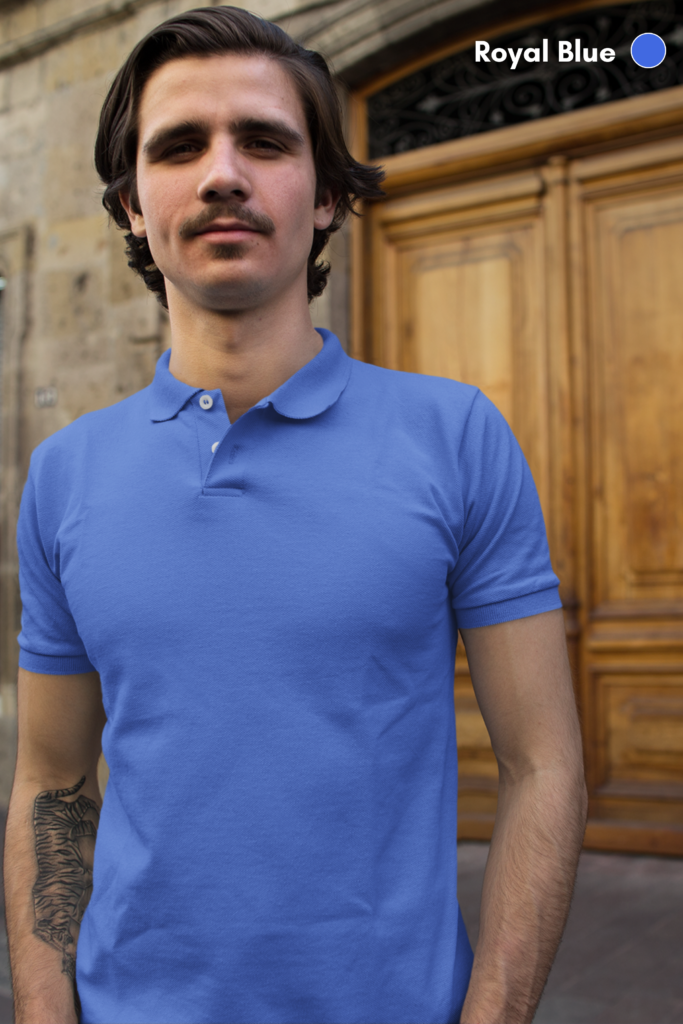
pique vs jersey polo T shirts — Piqué versus jersey polo T-shirts is a material-construction question, not simply a contest between high and low quality. Piqué often has a textured knit surface, while jersey commonly looks smoother. Both can be made in different fibres, yarn qualities and weights. That means neither name alone guarantees better breathability, a specific amount of stretch or a particular level of durability. Here is how to interpret the texture, drape, collar and care of each when buying polo T-shirts online in India.
The aim is to make a useful purchase decision, not to imply that all garments on this website have identical fibres, sizing or performance. Use the comparison as a starting point, then check the exact listing. Namakool offers men’s clothing, women’s clothing and other options in its online shop.
What is piqué knit in a polo T-shirt?

Piqué describes a knit structure often associated with small raised or recessed texture on the fabric face. Traditional polo styling frequently uses piqué, but the exact pattern and density differ between manufacturers. The surface can feel more dimensional than plain jersey and may maintain a distinctive casual-collared appearance.
Example to try: A textured navy polo with stone chinos can look familiar and slightly structured, but appearance depends on fit and garment finishing too.
How to decide: Read the actual fibre composition and fabric description. Do not assume the word piqué means one fixed fibre or an automatically premium product.
Simple real-world test: Write down the occasion and the actual hours you will wear the garment. Compare how it behaves while standing, sitting and reaching, rather than evaluating only the first mirror impression. If a proposed style works only for a photograph and not for the day you have planned, that is valuable buying information. In this section, apply that test specifically to what is piqué knit in a polo t-shirt?; the aim is to decide what matters for your outfit, care routine and garment fit.
Avoid this assumption: A garment name is not a laboratory test. Avoid assuming a particular amount of warmth, durability, breathability, stretch or shrink resistance unless the listed fabric and testing evidence support it. Use product-specific measurements, fabric and care information before making a strong claim. If the seller has not disclosed a detail, it should remain an open question rather than a promise.
What is jersey knit in a polo?

Jersey commonly refers to a knit structure with a relatively smooth face and a different appearance on the reverse. It is widely used for T-shirts and can also form softer-looking polo shirts. Jersey fabric may drape differently from textured piqué, yet fibre selection and knit density can change how each option feels.
Example to try: A smooth black jersey polo could work well under a lightweight jacket when less visible texture is preferred.
How to decide: Compare garment photographs and sizing. A smooth face does not guarantee that the shirt will be thin, sheer or unsuitable for office-casual use.
Simple real-world test: Place a garment you already enjoy beside the new option. Compare the neckline, shoulder seam, chest width and length using the exact product measurement method. Look for one improvement at a time; changing several variables makes it hard to know which change created a more comfortable result. In this section, apply that test specifically to what is jersey knit in a polo?; the aim is to decide what matters for your outfit, care routine and garment fit.
Avoid this assumption: Body shape should not be treated as a rule that forbids a silhouette. The useful questions are ease, mobility, fabric behaviour and personal preference, not whether somebody is tall, short, slim or broad. Use product-specific measurements, fabric and care information before making a strong claim. If the seller has not disclosed a detail, it should remain an open question rather than a promise.
Texture: raised patterns versus smoother surfaces

The most obvious visual difference is often the surface. Piqué may display small geometric texture, while jersey usually gives a more continuous face. Texture influences how light reflects from the garment and can change the impression of colour and formality. However, closely cropped product photographs are needed for useful comparison.
Example to try: When comparing a white piqué and white jersey polo, look beyond colour and notice the weave-like or smooth surface from close photos.
How to decide: Remember that digital image quality and lighting influence what you see. A listing should provide enough detail to avoid guessing the actual material.
Simple real-world test: Consider the whole outfit, including trousers, shoes and any outer layer. Check whether fabric gathers under a jacket, whether the hem moves when seated, and whether the collar still sits comfortably after carrying a bag. An outfit needs to function during movement, not just look balanced at rest. In this section, apply that test specifically to texture: raised patterns versus smoother surfaces; the aim is to decide what matters for your outfit, care routine and garment fit.
Avoid this assumption: One high-quality-looking photograph cannot prove construction quality. Inspect multiple views, size measurements, seam details and any disclosed materials before making comparisons. Use product-specific measurements, fabric and care information before making a strong claim. If the seller has not disclosed a detail, it should remain an open question rather than a promise.
Does one fabric breathe better?

Breathability depends on air permeability through the material and on the complete clothing system. Structure, fibre, thickness, finishing and fit all matter. Some piqué constructions feel airy; some jersey constructions can also allow good airflow. The fabric name is not a breathability measurement.
Example to try: For a humid Indian commute, a comfortably loose, lightweight polo may feel better than a tight heavy one, regardless of its knit category.
How to decide: Avoid universal claims that piqué always keeps you cool or jersey always traps heat. Look for disclosed composition, fabric weight and fit.
Simple real-world test: Review real product images in daylight where possible. Studio lighting can make a material look smoother or darker than it appears in person. Texture, stretch and finishing can rarely be established from a single picture, so use photographs together with fibre content, the size chart and clear product descriptions. In this section, apply that test specifically to does one fabric breathe better?; the aim is to decide what matters for your outfit, care routine and garment fit.
Avoid this assumption: An expensive fabric or famous trend is not automatically appropriate for your routine. A cheaper but well-fitting garment that is easy to wear and care for may be the more useful purchase. Use product-specific measurements, fabric and care information before making a strong claim. If the seller has not disclosed a detail, it should remain an open question rather than a promise.
Related reading: Read a Namakool guide on garment fit and buying details. Compare the garment’s actual measurements before selecting a size.
How piqué and jersey drape on the body

A polo's silhouette depends on knit, yarn, weight, pattern and finishing. Textured piqué can appear more substantial in some constructions; jersey may move more fluidly. Neither effect is guaranteed for every item. Shoulder width and torso ease often have as much visual impact as texture.
Example to try: Wear the two polo styles with the same straight jeans. Compare how the fabric falls across the chest and around the hem when seated.
How to decide: If a shirt looks boxy, do not automatically blame piqué; the underlying pattern may be intentionally relaxed.
Simple real-world test: Think about the climate and the transitions in your day: outdoor commute, vehicle, air-conditioned office, classroom, lunch and evening. The best material or outfit may need layers that can be removed. Do not assume that a garment rated comfortable in one Indian city will feel identical in another season or location. In this section, apply that test specifically to how piqué and jersey drape on the body; the aim is to decide what matters for your outfit, care routine and garment fit.
Avoid this assumption: Online colours vary across screens and lighting. Consider the difference between a close match and an intentional contrast when pairing the garment with existing clothes. Use product-specific measurements, fabric and care information before making a strong claim. If the seller has not disclosed a detail, it should remain an open question rather than a promise.
Stretch, recovery and ribbed cuffs

Knitted fabrics can stretch mechanically, but the extent and recovery depend on construction, fibre and any elastane. Ribbed sleeve cuffs can make a polo feel snug even when its main body is comfortable. Collars, plackets and hems are separate parts with their own structure.
Example to try: Try moving your arms forward while wearing a polo and notice whether the sleeve cuff or chest pulls, then compare with another cut.
How to decide: A jersey label does not mean high stretch, and a piqué label does not mean low stretch. Check the product specifications.
Simple real-world test: Check the clothing label before selecting a washing routine. The allowed temperature, mechanical action, bleach restrictions, drying and ironing symbols matter. Do not transfer the care instructions from a different shirt simply because both have the same colour or broad garment name. Decoration may require additional restrictions. In this section, apply that test specifically to stretch, recovery and ribbed cuffs; the aim is to decide what matters for your outfit, care routine and garment fit.
Avoid this assumption: Care advice should stay conditional on the label. High heat, strong chemicals and vigorous rubbing can harm some fibres or decorations, so broad rules should not override garment-specific instructions. Use product-specific measurements, fabric and care information before making a strong claim. If the seller has not disclosed a detail, it should remain an open question rather than a promise.
GSM and fabric thickness are separate variables

GSM measures grams per square metre of fabric. A heavy jersey can outweigh a light piqué, and a well-made lightweight polo may be the better choice for some climates. Fabric weight influences drape and drying time but should not be confused with an overall quality score.
Example to try: If you like a substantial polo collar for evening wear, focus on both fabric weight and collar construction, not GSM alone.
How to decide: Compare similar fits and fibre compositions when using GSM. Different garment dimensions can make finished-shirt weight misleading.
Simple real-world test: Measure the garment on a flat surface without stretching it. Record where the shoulder, chest, sleeve and hem actually fall. A fit label such as slim, regular or relaxed is useful context, but sizing conventions differ and cannot replace the specific measurements of the item you intend to purchase. In this section, apply that test specifically to gsm and fabric thickness are separate variables; the aim is to decide what matters for your outfit, care routine and garment fit.
Avoid this assumption: GSM measures fabric mass per unit area; it does not independently measure quality, stretch, opacity or comfort. Construction and finishing are separate considerations. Use product-specific measurements, fabric and care information before making a strong claim. If the seller has not disclosed a detail, it should remain an open question rather than a promise.
Piqué or jersey for office-casual outfits?

Both fabric types can be worn in workplaces that permit polos. Texture may make piqué feel more traditional, while a smooth jersey polo can read as minimalist, but appearance also depends on colour, fit and grooming. A formal office may not permit either. The dress code remains the deciding factor.
Example to try: Try a navy piqué polo with beige chinos for a traditional look or a smooth charcoal polo with dark trousers for a modern minimal look.
How to decide: Do not treat a collar and buttons as automatic permission for business-formal settings. Check the workplace policy.
Simple real-world test: Try the proposed combination with the layer you really plan to wear. A loose outer garment can conceal bunching, while a close jacket may magnify it. Make sure the armhole and sleeve allow movement; if one layer pulls, changing the base fit may work better than increasing every size. In this section, apply that test specifically to piqué or jersey for office-casual outfits?; the aim is to decide what matters for your outfit, care routine and garment fit.
Avoid this assumption: A relaxed cut is not always a larger version of a regular cut. Shoulder drop, body length, sleeve geometry and hem opening can be designed differently. Use product-specific measurements, fabric and care information before making a strong claim. If the seller has not disclosed a detail, it should remain an open question rather than a promise.
Polo colours, opacity and visible texture

Fabric colour looks different across screens, and textured surfaces may catch highlights differently from smooth ones. White and pale shades can raise opacity questions; opacity depends on knit, yarn and colour as well as weight. Dark polos may show surface fuzz in a different way.
Example to try: When buying a light polo online, look for close-ups in daylight and clear product specifications rather than assuming all fabric of a named GSM is opaque.
How to decide: If you need a crisp uniform colour for a team, confirm the actual shade across sizes and batches rather than relying only on thumbnails.
Simple real-world test: If the outfit is intended for work or a formal setting, read the actual dress code or ask the organiser. Smart-casual means different things in different workplaces, schools and events. A neat item is not automatically acceptable for an occasion that specifically requires a collared shirt, uniform or particular colour. In this section, apply that test specifically to polo colours, opacity and visible texture; the aim is to decide what matters for your outfit, care routine and garment fit.
Avoid this assumption: Do not claim that a certain outfit meets every office dress code. A creative workplace may accept an outfit that a formal client meeting or institution does not. Use product-specific measurements, fabric and care information before making a strong claim. If the seller has not disclosed a detail, it should remain an open question rather than a promise.
Care reference: Read the external textile or care information. This is background guidance, not a certification of any specific Namakool item.
Printing and embroidery on polo fabrics

Custom decoration must account for fabric surface and movement. Small embroidery designs can work on many polos, but stitch density, backing and fabric stability matter. Printed designs may feel different on textured piqué than smooth jersey, depending on the decoration method and artwork.
Example to try: For a company logo, request a sample of the intended base garment and decoration technique, especially before placing a bulk order.
How to decide: Do not promise that every design works equally on both fabrics. Confirm supplier recommendations and care instructions for the exact garment.
Simple real-world test: Compare how frequently you expect to use the item, not just the initial price. A versatile garment can support multiple outfits without needing new trousers or shoes. Consider cleaning effort, storage space, comfort and any special care before deciding that a slightly different fabric is worth buying. In this section, apply that test specifically to printing and embroidery on polo fabrics; the aim is to decide what matters for your outfit, care routine and garment fit.
Avoid this assumption: Not every texture visible in a product photo is a material property. Lighting, washing, fabric finishing and photography can affect the impression, so look for written specifications. Use product-specific measurements, fabric and care information before making a strong claim. If the seller has not disclosed a detail, it should remain an open question rather than a promise.
Washing and shape retention

Piqué and jersey polos can have different care needs depending on fibre content and finishing. Collars, cuffs and button plackets may require gentle shaping after laundry. The care symbols determine permitted water temperatures, drying and ironing. Never apply high heat merely to make fabric look smoother.
Example to try: For a jersey polo with a printed design, the decoration may restrict ironing. For a textured piqué polo, pressing too aggressively can alter appearance.
How to decide: Prioritise label-compliant washing and allow the garment to dry completely before storage. Check the collar and hem for distortion.
Simple real-world test: For team orders or several matching outfits, ask for consistent measurements and decoration details in writing. Batch differences, fabric choices and colour availability may matter more when people need a coordinated result. Samples and documented specifications are more dependable than a promise that every garment will behave alike. In this section, apply that test specifically to washing and shape retention; the aim is to decide what matters for your outfit, care routine and garment fit.
Avoid this assumption: Do not assume a process label guarantees longevity. Stitch quality, fibre, washing, abrasion and individual use can change how garments age. Use product-specific measurements, fabric and care information before making a strong claim. If the seller has not disclosed a detail, it should remain an open question rather than a promise.
FAQs: should you choose piqué or jersey?

Is piqué always better? No. Is jersey only for casual T-shirts? No, it also appears in polos. Is piqué cooler? Construction matters. Can both be embroidered? Often yes, with suitable production methods. Which looks formal? Fit, colour and dress code influence the result. Which lasts longer? A fabric name alone cannot predict wear life.
Example to try: Choose based on the texture you prefer, the feel and drape you need, and the practical details disclosed on the product page.
How to decide: When comparing online listings, put fibre composition, fabric weight, measurements, finishing and care guidance side by side rather than relying on the knit label.
Simple real-world test: Check the returns, sizing and delivery information on the current product page before ordering. Screenshot or save important specifications if you compare several versions. If a crucial feature is not disclosed—such as fabric composition, length or decoration method—contact the seller rather than inferring it from generic photographs. In this section, apply that test specifically to faqs: should you choose piqué or jersey?; the aim is to decide what matters for your outfit, care routine and garment fit.
Avoid this assumption: If you are between sizes, do not follow a universal size-up rule. Use the precise chart and decide whether the resulting fit matches your intended silhouette. Use product-specific measurements, fabric and care information before making a strong claim. If the seller has not disclosed a detail, it should remain an open question rather than a promise.
For more ideas, explore another Namakool style or fabric guide. A good buying decision brings together measurements, material, intended use and care—not just a colour or marketing label.
Browse available styles: Shop MEN or Shop WOMEN. Check the exact product page for updated prices, sizes, availability, delivery information and applicable return terms before completing your order.