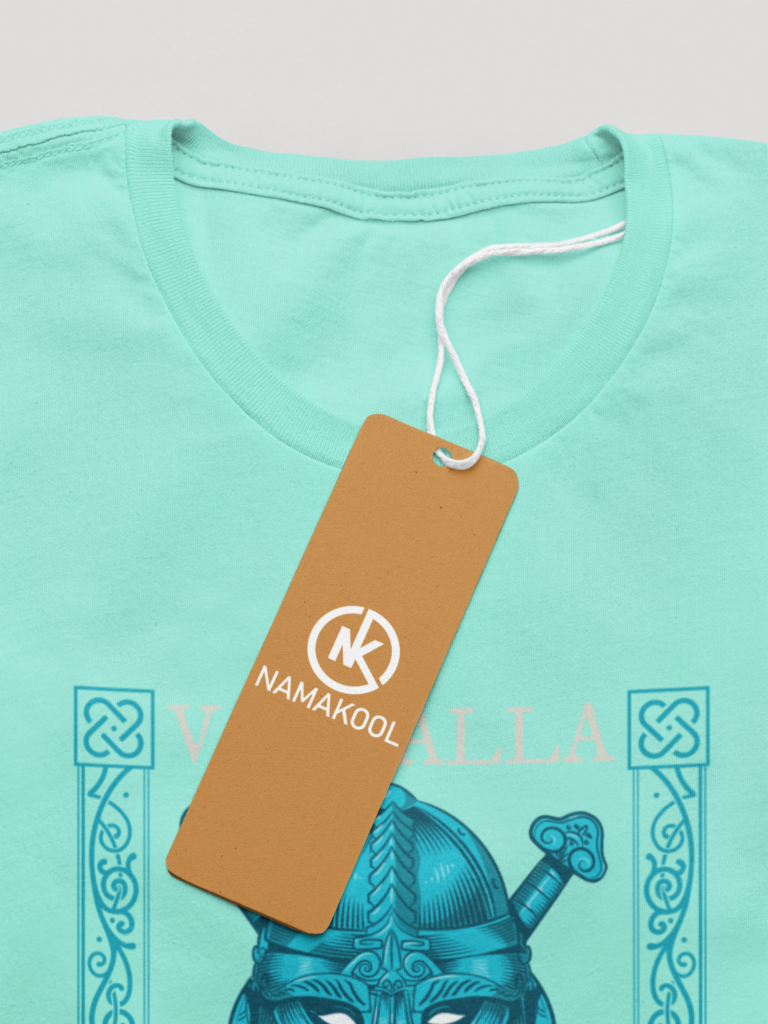
how to prevent T shirt collar stretching — A stretched crew-neck collar can make an otherwise comfortable T-shirt feel untidy. Common causes include repeated pulling over the head, rough handling while wet, unsuitable hangers, garment weight and ordinary fabric fatigue. Some necklines recover well; others do not return to their original dimensions. This guide explains how to prevent unnecessary stretching, what to observe in construction and why viral fixes involving hot water or ironing should not automatically be used on every fabric.
The aim is to make a useful purchase decision, not to imply that all garments on this website have identical fibres, sizing or performance. Use the comparison as a starting point, then check the exact listing. Namakool offers men’s clothing, women’s clothing and other options in its online shop.
What causes a T-shirt neckline to stretch?

A T-shirt collar is repeatedly stretched when the garment passes over the head. Rib knit and seams are meant to allow some movement, but long-term stress, abrasion and harsh handling can change recovery. The problem may be in the ribbing, the seam attaching it, or the surrounding fabric. The visible result can look similar despite different causes.
Example to try: If the neckline has become wavy all around, check how it was washed and handled. If only one section droops, inspect the shoulder and neck seams for distortion.
How to decide: A stretched collar is not always evidence of poor cotton. Construction, fabric recovery, use and care need to be assessed together.
Simple real-world test: Write down the occasion and the actual hours you will wear the garment. Compare how it behaves while standing, sitting and reaching, rather than evaluating only the first mirror impression. If a proposed style works only for a photograph and not for the day you have planned, that is valuable buying information. In this section, apply that test specifically to what causes a t-shirt neckline to stretch?; the aim is to decide what matters for your outfit, care routine and garment fit.
Avoid this assumption: A garment name is not a laboratory test. Avoid assuming a particular amount of warmth, durability, breathability, stretch or shrink resistance unless the listed fabric and testing evidence support it. Use product-specific measurements, fabric and care information before making a strong claim. If the seller has not disclosed a detail, it should remain an open question rather than a promise.
The role of rib-knit collar construction

Crew-neck collars often use a rib-knit band because its structure can stretch over the head and recover. Collar width, rib composition, stitching and the way the band is attached affect how it lies. A neckband that is too loose in the original pattern can look stretched even before repeated wear.
Example to try: Compare a new tee with one that has held its shape for a long time. Look at collar thickness, visible twisting and whether the front neck opening sits evenly.
How to decide: Avoid claiming that thick ribbing always lasts longer. Attachment quality and yarn properties also matter, so consider the whole garment.
Simple real-world test: Place a garment you already enjoy beside the new option. Compare the neckline, shoulder seam, chest width and length using the exact product measurement method. Look for one improvement at a time; changing several variables makes it hard to know which change created a more comfortable result. In this section, apply that test specifically to the role of rib-knit collar construction; the aim is to decide what matters for your outfit, care routine and garment fit.
Avoid this assumption: Body shape should not be treated as a rule that forbids a silhouette. The useful questions are ease, mobility, fabric behaviour and personal preference, not whether somebody is tall, short, slim or broad. Use product-specific measurements, fabric and care information before making a strong claim. If the seller has not disclosed a detail, it should remain an open question rather than a promise.
Remove a T-shirt without tugging at the neck

Pulling a tee off by grabbing only the front collar focuses force on a narrow section of fabric. Instead, remove it with a balanced movement that does not repeatedly stretch the same seam. The aim is to reduce unnecessary stress, not to treat clothing as fragile equipment.
Example to try: When changing after exercise, avoid yanking a damp tee by one side of the neck opening. Loosen the body and shoulders first, then guide it over the head.
How to decide: If a garment is difficult to remove comfortably, it may be too narrow at the shoulders or neck. Check the fit rather than forcing it each time.
Simple real-world test: Consider the whole outfit, including trousers, shoes and any outer layer. Check whether fabric gathers under a jacket, whether the hem moves when seated, and whether the collar still sits comfortably after carrying a bag. An outfit needs to function during movement, not just look balanced at rest. In this section, apply that test specifically to remove a t-shirt without tugging at the neck; the aim is to decide what matters for your outfit, care routine and garment fit.
Avoid this assumption: One high-quality-looking photograph cannot prove construction quality. Inspect multiple views, size measurements, seam details and any disclosed materials before making comparisons. Use product-specific measurements, fabric and care information before making a strong claim. If the seller has not disclosed a detail, it should remain an open question rather than a promise.
Sort laundry to reduce neckline abrasion

Heavy denim, zipped accessories and tightly packed loads can create friction and snagging. While a T-shirt collar is designed to survive normal laundry, repeated rough contact may contribute to wear. Sorting by colour and compatible fabric weight is a simple way to reduce avoidable stress.
Example to try: Wash light casual tops with compatible garments rather than placing delicate neckbands among multiple heavy jeans or items with exposed hooks.
How to decide: Do not assume that turning a tee inside out alone fixes all laundry problems. The care label, load size and cycle still matter.
Simple real-world test: Review real product images in daylight where possible. Studio lighting can make a material look smoother or darker than it appears in person. Texture, stretch and finishing can rarely be established from a single picture, so use photographs together with fibre content, the size chart and clear product descriptions. In this section, apply that test specifically to sort laundry to reduce neckline abrasion; the aim is to decide what matters for your outfit, care routine and garment fit.
Avoid this assumption: An expensive fabric or famous trend is not automatically appropriate for your routine. A cheaper but well-fitting garment that is easy to wear and care for may be the more useful purchase. Use product-specific measurements, fabric and care information before making a strong claim. If the seller has not disclosed a detail, it should remain an open question rather than a promise.
Related reading: Read a Namakool guide on garment fit and buying details. Compare the garment’s actual measurements before selecting a size.
Choose water temperature and cycle by the label

The garment-care symbols state which treatments are permitted. High heat and severe mechanical action may affect some fibres, finishes and seams; the direction and extent of change vary. Gentle handling is often appropriate when the label permits it, but a universal temperature claim is unreliable.
Example to try: For a favourite graphic tee, confirm both fabric and decoration instructions before selecting a cycle. Some transfers may have additional restrictions.
How to decide: Avoid viral claims that boiling water safely shrinks a loose collar back into shape. Heat can distort the whole garment or damage prints.
Simple real-world test: Think about the climate and the transitions in your day: outdoor commute, vehicle, air-conditioned office, classroom, lunch and evening. The best material or outfit may need layers that can be removed. Do not assume that a garment rated comfortable in one Indian city will feel identical in another season or location. In this section, apply that test specifically to choose water temperature and cycle by the label; the aim is to decide what matters for your outfit, care routine and garment fit.
Avoid this assumption: Online colours vary across screens and lighting. Consider the difference between a close match and an intentional contrast when pairing the garment with existing clothes. Use product-specific measurements, fabric and care information before making a strong claim. If the seller has not disclosed a detail, it should remain an open question rather than a promise.
Avoid twisting or wringing the neckband

Twisting a wet T-shirt by the collar concentrates force on an area that is already stressed during wear. When handwashing, support the garment as a whole rather than using the neckline as a handle. If machine washing is permitted, use the cycle indicated by the tag.
Example to try: When removing a wet shirt from a bucket, gather it from the body fabric and lift it evenly. Avoid wringing from the neck to the hem.
How to decide: A wet cotton shirt may feel heavier than when dry. Handle it with support so the collar is not bearing the garment's full weight.
Simple real-world test: Check the clothing label before selecting a washing routine. The allowed temperature, mechanical action, bleach restrictions, drying and ironing symbols matter. Do not transfer the care instructions from a different shirt simply because both have the same colour or broad garment name. Decoration may require additional restrictions. In this section, apply that test specifically to avoid twisting or wringing the neckband; the aim is to decide what matters for your outfit, care routine and garment fit.
Avoid this assumption: Care advice should stay conditional on the label. High heat, strong chemicals and vigorous rubbing can harm some fibres or decorations, so broad rules should not override garment-specific instructions. Use product-specific measurements, fabric and care information before making a strong claim. If the seller has not disclosed a detail, it should remain an open question rather than a promise.
Dry without hanging a heavy wet tee by the collar

The drying method must match the care label. A fully wet heavyweight tee can put stress on the neck opening if hung from a narrow hook. A supported drying rack may help when flat or supported drying is allowed. Never substitute a broad recommendation for specific drying symbols.
Example to try: If you use a hanger, inspect whether it creates a sharp point against the neckband. Avoid leaving a soaked tee suspended by a single hook.
How to decide: Do not assume every T-shirt must be dried flat. Follow the label and use a method that supports the garment without distorting the seam.
Simple real-world test: Measure the garment on a flat surface without stretching it. Record where the shoulder, chest, sleeve and hem actually fall. A fit label such as slim, regular or relaxed is useful context, but sizing conventions differ and cannot replace the specific measurements of the item you intend to purchase. In this section, apply that test specifically to dry without hanging a heavy wet tee by the collar; the aim is to decide what matters for your outfit, care routine and garment fit.
Avoid this assumption: GSM measures fabric mass per unit area; it does not independently measure quality, stretch, opacity or comfort. Construction and finishing are separate considerations. Use product-specific measurements, fabric and care information before making a strong claim. If the seller has not disclosed a detail, it should remain an open question rather than a promise.
Select hangers and folding methods carefully

A hanger whose shoulders are too wide can stretch the collar when pushed through the neckline or make shoulder bumps. A hanger with a smooth profile can help, but folding may be simpler for heavier knitted tees. Storage should suit available space and garment weight.
Example to try: Insert a suitable hanger from the bottom of the T-shirt where practical rather than forcing it through a narrow crew neck.
How to decide: Avoid overstuffed hanging rails that pull one collar against another. Clean, dry storage with enough room reduces unnecessary friction.
Simple real-world test: Try the proposed combination with the layer you really plan to wear. A loose outer garment can conceal bunching, while a close jacket may magnify it. Make sure the armhole and sleeve allow movement; if one layer pulls, changing the base fit may work better than increasing every size. In this section, apply that test specifically to select hangers and folding methods carefully; the aim is to decide what matters for your outfit, care routine and garment fit.
Avoid this assumption: A relaxed cut is not always a larger version of a regular cut. Shoulder drop, body length, sleeve geometry and hem opening can be designed differently. Use product-specific measurements, fabric and care information before making a strong claim. If the seller has not disclosed a detail, it should remain an open question rather than a promise.
Understand collar recovery and fabric fatigue

Stretch recovery describes how well a fabric returns after being extended. Cotton, blended yarns, rib structures and finishing may behave differently. A neckline can gradually lose its shape through normal wear, and some distortion is permanent. No simple home method guarantees full recovery.
Example to try: Compare the collar after a normal wash, complete drying and a rest period. If it still sits wider or wavier than before, recovery may be limited.
How to decide: A damaged or loosened seam may require professional repair; aggressive heat or pulling could make the neckline less even.
Simple real-world test: If the outfit is intended for work or a formal setting, read the actual dress code or ask the organiser. Smart-casual means different things in different workplaces, schools and events. A neat item is not automatically acceptable for an occasion that specifically requires a collared shirt, uniform or particular colour. In this section, apply that test specifically to understand collar recovery and fabric fatigue; the aim is to decide what matters for your outfit, care routine and garment fit.
Avoid this assumption: Do not claim that a certain outfit meets every office dress code. A creative workplace may accept an outfit that a formal client meeting or institution does not. Use product-specific measurements, fabric and care information before making a strong claim. If the seller has not disclosed a detail, it should remain an open question rather than a promise.
Care reference: Read the external textile or care information. This is background guidance, not a certification of any specific Namakool item.
Should you iron a stretched collar?

Some household tutorials suggest ironing or steaming a stretched neckline. Whether such treatment is safe depends on fibre content, finishes, printed decoration and care symbols. Pressing may temporarily smooth a wavy surface without restoring the original rib elasticity. Too much heat can cause new damage.
Example to try: If the garment permits ironing, follow the indicated setting and avoid direct pressure on heat-sensitive prints. Do not rely on ironing as a permanent repair promise.
How to decide: If the collar looks structurally warped, replacing a neckband may be a sewing repair rather than a laundry task.
Simple real-world test: Compare how frequently you expect to use the item, not just the initial price. A versatile garment can support multiple outfits without needing new trousers or shoes. Consider cleaning effort, storage space, comfort and any special care before deciding that a slightly different fabric is worth buying. In this section, apply that test specifically to should you iron a stretched collar?; the aim is to decide what matters for your outfit, care routine and garment fit.
Avoid this assumption: Not every texture visible in a product photo is a material property. Lighting, washing, fabric finishing and photography can affect the impression, so look for written specifications. Use product-specific measurements, fabric and care information before making a strong claim. If the seller has not disclosed a detail, it should remain an open question rather than a promise.
How to identify a stronger neckline before buying

Inspect the collar seam and ribbing in product photographs. Look for an even band, neat stitching and a shape that lies flat on the model without pulling at the shoulders. A clear size chart helps ensure the neckline is not strained every time the shirt goes on or off.
Example to try: A tee with a comfortable opening and appropriate body fit may be easier to handle gently than one that is excessively tight at the neck.
How to decide: Marketing phrases such as premium neck or anti-stretch need product-specific evidence. Material and construction details are more useful than slogans.
Simple real-world test: For team orders or several matching outfits, ask for consistent measurements and decoration details in writing. Batch differences, fabric choices and colour availability may matter more when people need a coordinated result. Samples and documented specifications are more dependable than a promise that every garment will behave alike. In this section, apply that test specifically to how to identify a stronger neckline before buying; the aim is to decide what matters for your outfit, care routine and garment fit.
Avoid this assumption: Do not assume a process label guarantees longevity. Stitch quality, fibre, washing, abrasion and individual use can change how garments age. Use product-specific measurements, fabric and care information before making a strong claim. If the seller has not disclosed a detail, it should remain an open question rather than a promise.
FAQs about loose or wavy T-shirt collars

Can a loose collar be fixed? Some distortion may be improved by careful pressing or repair, but results vary. Does cold water stop stretching? Not by itself. Is every stretched collar defective? No. Should heavy tees be folded? Often convenient, where appropriate. Can over-drying cause problems? It depends on the fabric and care label.
Example to try: The best prevention is proper fit, gentle handling, label-appropriate washing and storage that does not load the collar. These habits cannot reverse every form of wear.
How to decide: Before buying a replacement, compare the existing garment's shoulder width, neck opening, rib construction and daily care conditions to identify what you want to change.
Simple real-world test: Check the returns, sizing and delivery information on the current product page before ordering. Screenshot or save important specifications if you compare several versions. If a crucial feature is not disclosed—such as fabric composition, length or decoration method—contact the seller rather than inferring it from generic photographs. In this section, apply that test specifically to faqs about loose or wavy t-shirt collars; the aim is to decide what matters for your outfit, care routine and garment fit.
Avoid this assumption: If you are between sizes, do not follow a universal size-up rule. Use the precise chart and decide whether the resulting fit matches your intended silhouette. Use product-specific measurements, fabric and care information before making a strong claim. If the seller has not disclosed a detail, it should remain an open question rather than a promise.
For more ideas, explore another Namakool style or fabric guide. A good buying decision brings together measurements, material, intended use and care—not just a colour or marketing label.
Browse available styles: Shop MEN or Shop WOMEN. Check the exact product page for updated prices, sizes, availability, delivery information and applicable return terms before completing your order.