A curtain haircut for men divides the front into two sections that sit around a middle or slightly off-centre part. The most useful version is one that works with your growth direction and daily routine. You can keep the outline compact, allow more movement around the ears, or work towards a longer shape.
Curtain fringes feature in British GQ’s 2026 men’s hair overview. That gives this familiar style current editorial relevance, but it does not mean every person needs the same haircut. This guide focuses on choosing a version, explaining it clearly and judging the practical result.
The photographs below are existing hairstyle references from Namakool’s media collection. They show curtains and related longer shapes for comparison, rather than documenting new salon work in 2026. Use them to discuss specific details with a barber, and bring additional references resembling your own hair.
Choose a curtain length that fits your normal day
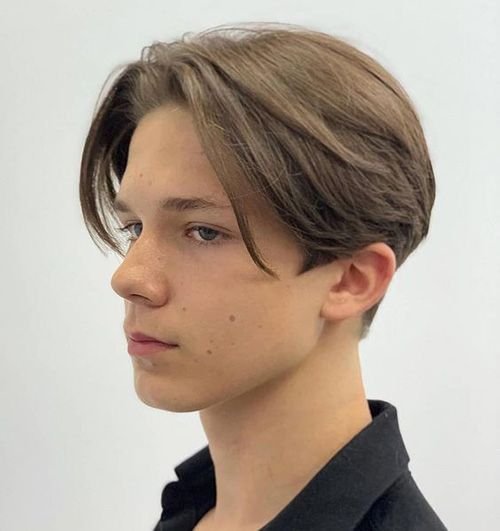
The first decision is not whether the part must sit exactly in the middle. It is how much hair you want around your eyes, ears and neck. A compact curtain shape can keep the front relatively controlled while still showing a clear split. Longer curtains create more movement, but may also fall forward when you read, work or travel. Think about those moments before deciding which photograph you prefer.
Begin with your current length. If the front is very short, ask what can be shaped now and what needs time to grow. A barber cannot create the same falling movement from every starting point. It may be more helpful to plan an intermediate cut that stays comfortable than to force the final outline too early. Take a photograph of the starting shape so you can see progress without judging it every morning.
Describe the shortest front piece using a physical point, such as where you want it to sit beside your brow or cheek. Do the same for ear coverage and the back. These references are clearer than requesting “medium length,” which can mean different things to different people. If you want to tuck the sides away, demonstrate that movement during the consultation so the stylist can consider the necessary length.
Consider your daily accessories. Glasses may change where a side piece rests, while large headphones can press the hair around the ears. A helmet or cap can alter the finish after travel. These are reasons to choose a flexible outline, not reasons you cannot wear curtains. Tell your barber what you use regularly and ask how the shape will look after those ordinary activities.
Finally, decide what you want the haircut to do when you leave it alone. Do you enjoy a few pieces falling forward, or will that irritate you? Do you prefer the ears visible, or do you like a softer frame? These preferences matter more than copying a model’s face shape. The reference is a communication tool; the actual cut should be planned around your hair and comfort.
A useful first appointment goal is a wearable direction rather than a dramatic transformation. Agree the immediate shape, the eventual length and one simple styling method. That gives you a way to evaluate the result fairly. You can adjust the amount of volume or the exact position of the part after you have worn the cut through several normal days, including one busy morning when you have very little preparation time.
Understand curtains, side sweeps and longer flow
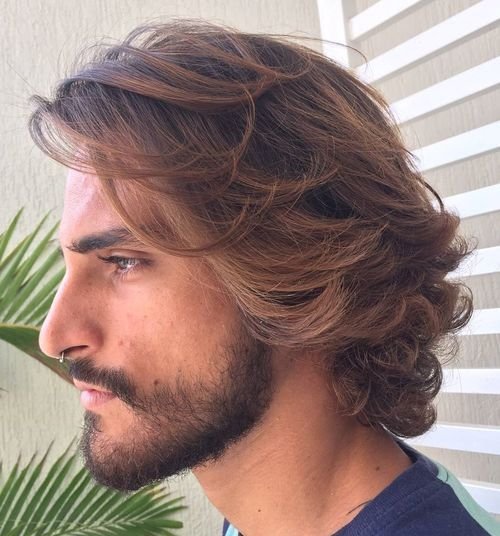
Haircut names overlap, so it helps to separate the outline from the finish. Curtains describe the way the front divides and falls on either side. A side sweep sends more of the front in one direction. Flow describes a longer, moving shape around the sides and back. One haircut may allow elements of all three, but that does not make the reference photographs interchangeable.
The layered side sweep pictured here is useful if you like movement but do not enjoy a symmetrical front. Show the stylist which aspect interests you: the length around the ears, the loose surface or the way the hair moves away from the face. If you simply ask for the whole picture, you may end up discussing a different cut from the curtains you originally wanted.
For straight hair, compare the natural part and the way the front sits after drying. For wavy hair, note where the bends change the apparent length. You do not need to flatten all movement to create a curtain effect. Equally, a photograph of a wavy finish may involve styling that your straight hair does not produce by itself. Ask what is realistic before agreeing to a specific outline.
Look at the back as carefully as the front. Two styles can look similar head-on but have very different weight around the neck. A shorter back might fit neatly above a shirt collar, while a longer outline can overlap it. If you often wear hoodies or high collars, consider how the hair and clothing will sit together. A side photograph helps explain this more clearly.
Avoid describing every unwanted detail as “too much volume.” You might mean too much width at the ears, too much height at the front or too much weight at the back. Those are separate observations. Point to the area and explain what feels inconvenient. This gives your barber a more useful problem to solve than a broad request to make everything smaller.
You can also ask whether the finished cut supports more than one part. Some people enjoy curtains on a relaxed day and a side sweep for work. Others find that their hair strongly prefers one direction. Treat that flexibility as something to test with your barber rather than a guarantee. The best comparison is between finishes on your own head, photographed in similar lighting, not between two completely different models online.
Make the look your own
Explore everyday tees, polos and casual layers at Namakool.
Build an everyday routine you can actually repeat

A salon finish is helpful only if you understand how to recreate a version of it. Before the appointment ends, ask which steps are essential and which were added for a more polished result. You may not need the same amount of preparation every morning. Explain how much time you normally allow and whether you use a dryer, comb or only your fingers.
Start by observing where your hair separates after your usual wash. Try a gentle middle or off-centre division while the hair is still manageable, then see how it settles. Do not assume that moving the part by a small amount means the haircut has failed. A slightly uneven curtain can be part of a relaxed look, especially if it follows your natural growth direction.
If the front will not stay where you want, ask your barber whether the issue is length, direction or the chosen finish. Adding more product is not the only possible answer. You might prefer a softer outline, less lift or a front piece that finishes in a different place. Take a quick photograph of the problem after an ordinary day, rather than trying to describe it from memory at the next visit.
When using a styling product, follow its instructions and start with an amount you can control. The useful question is what you want it to do: hold the part, reduce a flyaway appearance or give some separation. Different goals may call for different finishes. You do not need a shelf of products before you have identified the actual difficulty in your routine.
The sweep-back reference above shows another way to keep the face more open. It is not a picture of curtains, and you should not expect every curtain cut to sweep back in the same way. It can still help you explain that you want an alternative finish for travel, a meal or a day when hair near your eyes feels inconvenient. Ask whether your planned length will allow that option.
Test the routine over more than one day. Your first attempt may reflect unfamiliarity rather than a poor cut. Notice what happens after walking outside, sitting at a desk and putting on your usual headphones. Keep the steps that help and remove the ones that do not. A manageable curtain hairstyle should feel like part of getting dressed, rather than a performance you can complete only with perfect lighting and unlimited time.
Plan the growing-out stage and your next appointment

Growing a shorter haircut into curtains involves several stages, and the awkward part is often uneven progress between different areas. The top may be ready to part while the sides still feel too short, or the back may grow beyond the outline you prefer. A plan can make this easier without cutting away all the length you are trying to gain.
At the first consultation, ask which sections should be preserved and which can be tidied. Explain that the goal is curtains, rather than simply asking for a trim. If the stylist does not know your intended shape, a routine cleanup may maintain the old haircut instead of helping you move towards the new one. Photographs of the target side and back are useful here.
Do not rely on a universal appointment interval from a blog. The right schedule depends on the cut, your growth and how precise you want the outline to remain. Ask your barber what changes to watch for and when a reshaping visit is likely to be useful. That is more practical than booking frequent cuts automatically or avoiding the salon completely.
During the growing-out stage, judge specific areas. Is the front long enough to divide? Are the sides sitting comfortably? Does the back catch on a collar? Separating these questions stops one annoying detail from making you feel the entire process is failing. You may be able to improve the outline while keeping the length that matters for the final result.
The longer references above illustrate possible directions, not a requirement to grow your hair to the neck. You can stop at a compact curtain shape if that suits you. Conversely, if you discover that you enjoy the extra length, discuss a longer plan before the next trim. Your preference can change after wearing the intermediate stages, and that is a useful observation.
Keep a small reference record rather than saving dozens of contradictory pictures. Choose one front view, one side view and a note about what you liked after your last appointment. Include what did not work, such as a fringe that reached your eyes too quickly. A clear record helps the next conversation focus on adjustments. It also makes it easier to distinguish between a haircut issue and a styling habit you are still learning.
Pair curtain hair with simple casual outfits

A new hairstyle does not require a completely new wardrobe. Before shopping, wear your curtains with the tees, polos and shirts you already like. Notice the neckline and the amount of detail near your face. A plain crew neck can keep that area simple, while a polo or open shirt introduces a collar. Neither choice is automatically better; the useful question is how the combination feels to you.
For a relaxed college or weekend outfit, begin with a plain tee, straight jeans and comfortable trainers. Keep the hair finish soft if that matches the rest of your clothes. If the tee is oversized, check its length rather than assuming the loose shape needs to be balanced by very tight trousers. Comfortable proportions can be created with several different fits.
For a slightly neater look, try a polo and relaxed trousers. The collar adds structure without demanding a rigid hair finish. If the longer sides of your haircut sit over the collar, check the back in a mirror so you can see the whole outline. You may like that overlap, or you may prefer a lower neckline. This is an outfit decision, not a reason to change a haircut you enjoy.
An open shirt over a tee offers another option. Keep the inner layer simple if the shirt has a pattern, and make sure the sleeves have enough room. The hair, collar and outer layer already create several visible details. You can keep accessories minimal until you know whether the outfit needs anything more. Start with the bag and shoes that suit your actual day.
Colour can update the look without changing every garment. A purple or blue tee under a neutral shirt, or a maroon polo with denim, provides a clear point of interest. There is no special colour that all men with curtain hair must wear. Choose a shade that works with your existing clothes and compare it in daylight rather than relying only on a phone screen.
Finish by considering movement. Sit down, put on your bag and check whether the outfit remains comfortable while the hair falls naturally. A look that works only when every strand and hem is carefully arranged may not be the one you want for everyday use. Keep the elements you enjoy, simplify the rest and let the hairstyle become a familiar part of your personal style rather than a separate costume.
Frequently asked questions
Can I have curtains with straight hair?
Yes, a curtain shape can be adapted to straight hair, but the result may differ from a wavy reference. Discuss the natural part, front length and the styling you are willing to do. Ask to see an achievable everyday finish rather than expecting another person’s texture.
Does the part have to be exactly in the middle?
No. A slightly off-centre division can still give a curtain effect. Choose a position that feels comfortable and works with the way your hair grows. A barber can help you compare the options before finalising the shape.
Are curtains low maintenance?
They can suit a simple routine, but they are not automatically effortless. Daily styling and appointment upkeep are different commitments. Discuss both, including the amount of eye coverage you tolerate and how the shape changes as it grows.
Can I wear curtains with a beard?
Yes. Consider the overall outline and explain your preference at the appointment. You can keep the hair and beard softer or more defined without copying a particular model. The combination should suit your routine and the finish you enjoy.
What should I take to the barber?
Bring a small set of front and side references, explain what you like in each, and describe your usual morning routine. Mention glasses, helmets and other practical details. Clear preferences are more useful than a large collection of unrelated trend photographs.
More Namakool style guides
Make the look your own
Explore everyday tees, polos and casual layers at Namakool.