The main difference between a French crop and a textured crop is often the treatment of the front: a French crop usually emphasises a short forward fringe, while a textured crop may have a softer, more broken-up outline. In practice, the names overlap. A haircut can be both French-crop-inspired and textured, so a clear consultation matters more than winning an argument about labels.
British GQ’s short-haircut guide discusses French and textured versions of the crop among current options. This article uses that trend context to help you compare the choices, not to claim either is universally better.
The images are existing Namakool media references. Some show stronger fades or related fringe shapes for comparison. Explain which detail you want to copy and which you would change. The aim is a short haircut you can live with comfortably after the first styled photograph.
French crop: focus on the front edge
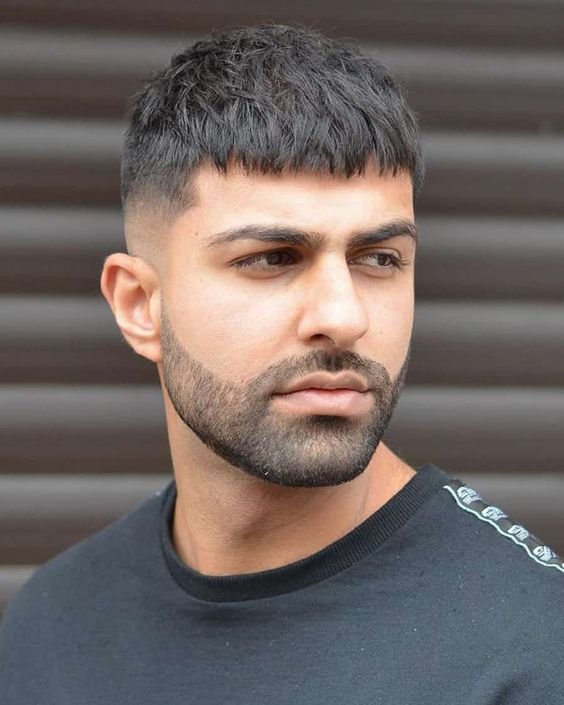
When comparing crops, start at the forehead. A French-crop reference often shows a short fringe directed forward, creating a visible front edge. That edge may be relatively straight or slightly softened. The sides and back can be shorter, but their exact treatment is a separate decision. You do not have to choose a dramatic fade simply because the front resembles a French crop.
Use a mirror to explain where you want the fringe to finish when dry. A small change in length can alter both the appearance and the daily feeling of the cut. Hair touching your forehead may be comfortable, while hair approaching your eyes may not be. Tell the barber what you will tolerate rather than choosing a photograph only because the model looks good.
Discuss the direction your hair naturally takes. Some sections may lift, separate or grow across the forehead instead of lying forward. A barber can assess how that affects the planned outline. A reference photo cannot reveal whether another person’s finished fringe required careful drying, product or repeated adjustment before the picture was taken. Ask about the everyday version on your own hair.
The reference here is useful for understanding a defined fringe, but you can request less contrast at the sides. Point to the front and say that this is the part you like. Then describe the side treatment separately. This prevents an accidental request for a complete haircut when you only wanted one feature. A front view and a side view are worth more than several nearly identical head-on photographs.
Think about how precise you want the shape to remain. A clearly defined fringe will gradually look different as it grows. That does not make the growing-out version wrong, but it affects maintenance. If you enjoy a softer appearance between appointments, say so. If you want the original outline kept very sharp, discuss the likely commitment before the first cut.
A helpful consultation sentence is: “I like the short forward front, but I want the sides softer and I need a routine I can do quickly.” Replace those details with your own preferences. You are giving the barber a result to work towards rather than simply naming a trend. That makes the finished haircut easier to evaluate and the next adjustment easier to explain if something feels different from what you expected.
If you are changing barbers, describe what was done previously and what you would like to keep. A recent photograph of your own haircut can be especially helpful because it shows your actual hair rather than an aspirational reference. Explain whether the picture was taken immediately after styling or at the end of a normal day.
Textured crop: compare separation, movement and shape
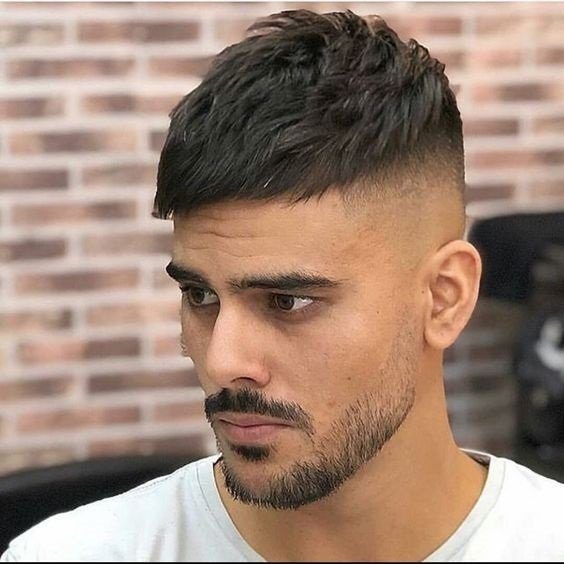
A textured crop puts more emphasis on small sections of movement across the top. The outline can look less uniform than a sharply defined fringe, although many textured crops still have a forward direction. “Textured” describes an effect rather than one exact haircut. It does not automatically mean messy, spiky, heavily thinned or effortless to style.
Before the cut, explain the kind of surface you prefer. Do you like small pieces that separate clearly, or a softer top with a little movement? Do you want the front lifted slightly, or mostly forward? These questions help distinguish your idea from the barber’s interpretation. A single word can hide several different preferences, so use a picture and point out the feature that matters.
Discuss how much daily styling you want to do. A textured photograph may show a finish created with product, while your normal routine may involve little more than drying and leaving the hair alone. Ask to see what the cut is likely to look like without a strong finish. That gives you a more realistic basis for choosing it than assuming texture will always arrange itself.
The image above has closely cut sides, which makes the top stand out more. You can use a gentler transition if you prefer a quieter outline. The amount of contrast affects the whole haircut, even when the top stays similar. Consider how you want the sides to look after some growth, not only immediately after the appointment.
Be precise when something feels too bulky. You might dislike height at the front, width above the ears or weight near the crown. Those are different areas. A general request to remove more hair everywhere may not solve the actual issue. Point out the location and describe how it behaves during an ordinary day, including whether it sticks up or collapses after travel.
For a first textured crop, it can help to choose a manageable version rather than the most dramatic reference. Learn how the new length behaves, then decide whether you want stronger separation or shorter sides next time. Keep a simple record of what you liked about the first week and what changed later. That feedback supports a better second appointment than chasing a different online picture every few days.
Make the look your own
Explore everyday tees, polos and casual layers at Namakool.
Compare a softer fringe before choosing a strict label
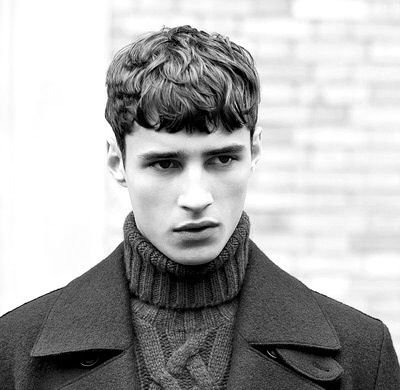
The useful middle ground between two labels is a clear description of the result. You may want a short cut with a forward front, some natural movement and no hard edge. That request can borrow from both a French crop and a textured crop without needing a perfect name. The barber’s understanding of the shape is what matters.
The softer wavy reference above illustrates how a front edge can break into smaller sections. It is not proof that every crop will look this way. Hair texture and growth direction affect the outcome, and the photograph may include styling. Use it to explain that you prefer a less uniform finish, then ask what an achievable version would look like on your own hair.
Compare the amount of forehead coverage in each picture. A slightly longer fringe may be easier to move, but it can also fall where you do not want it. A shorter fringe can feel more open while leaving fewer options for rearranging it. Neither is automatically more flattering. Choose according to the outline you enjoy and the amount of daily adjustment you find acceptable.
Consider the view from the side. A top that looks compact in a frontal photograph may stand much higher than expected. Conversely, a low profile can look quite different when combined with a very short side. Ask to see the planned balance before large amounts of length are removed. You can discuss a conservative first version if you are unsure.
If you already have a short cut, explain which part is working. Maybe you like the sides but dislike the front, or you enjoy the fringe but want less bulk on top. You do not need a complete change every time you try a new style. Preserving successful details can make the transition easier and help you understand which adjustment actually improves the haircut.
A practical comparison exercise is to choose two references and write one sentence about each. For example: “I prefer the fringe from this image and the softer sides from that one.” Ask the barber whether those details work together with your hair. This is more useful than presenting conflicting photos without explanation. It also leaves room for professional advice about the connection between the top, sides and back.
Choose the sides separately: taper, contrast and growing out
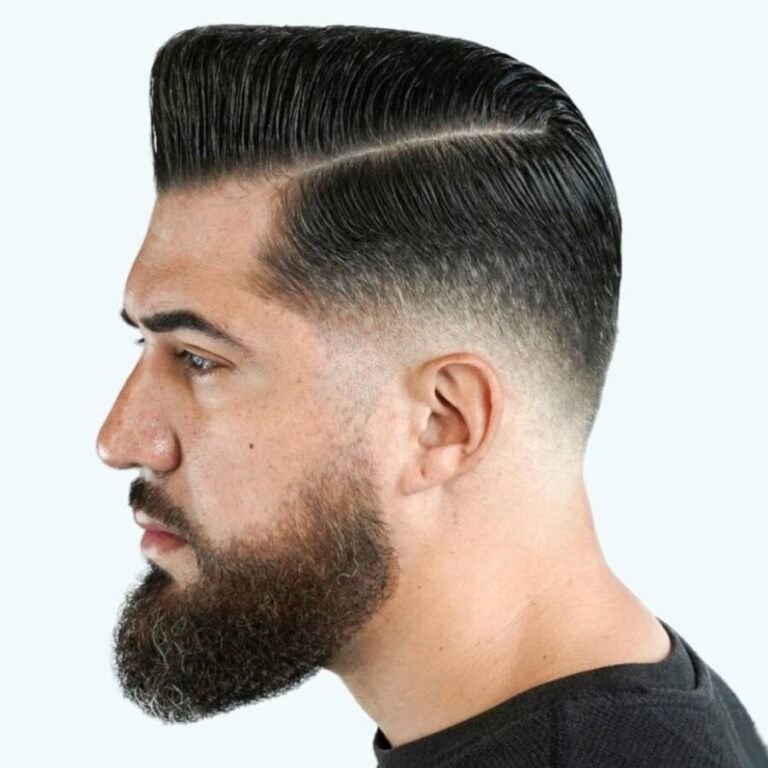
A crop and a fade are not the same decision. The crop describes the overall short top and fringe direction, while the sides can be shaped in several ways. A taper, a stronger fade or a softer scissor-cut outline changes the contrast. The side-part reference here is included to illustrate graduated sides, not to suggest that a combed side part is itself a French crop.
Tell your barber how much scalp visibility you are comfortable with. Also discuss where you want the shorter area to sit. These details are easier to agree with a side reference than with vague words such as “clean” or “fresh.” Two people may use those words while imagining very different lengths and transitions.
Think about how the haircut will change between visits. Closely cut areas can lose their original contrast as they grow, while a softer outline may be less dependent on a very precise edge. Ask what maintenance the proposed version is likely to need for your preferred appearance. There is no single appointment timetable that suits every crop or every person.
If you wear glasses, show how the arms sit above your ears. If you use a helmet or cap, mention that too. The haircut should remain practical around the things you actually wear. You do not need to abandon a style because of those accessories, but the barber should understand the context when planning length and weight around the sides.
Ask about the connection between the top and sides. A more disconnected look can be visually strong, while a smoother blend may feel quieter. Do not assume that copying the top of a photograph requires copying every side detail. Breaking the decision into separate parts gives you more control and avoids a result that is much more dramatic than you wanted.
At the end of the appointment, look at the back and both sides as well as the front. Ask any questions while the barber can show you the shape directly. If you are planning to grow it longer later, explain that before the next cleanup. A short haircut can be part of a longer-term plan, and the way you maintain the outline can either support that plan or keep returning you to the same starting point.
Make the haircut work with your routine and wardrobe
Choosing between crops should include the life you lead after leaving the barber. Think about your morning schedule, commute and the amount of styling you enjoy. A haircut described as simple can still need some attention to sit the way it does in a photograph. Ask for a demonstration that matches your routine, including an ordinary finish rather than only the most polished version.
Try the new cut through several normal days before deciding it needs a major change. Notice whether the front behaves as expected after washing, whether the sides remain comfortable around glasses and whether your usual headwear changes the shape. Record the specific issue if something bothers you. “The left front lifts after drying” is more useful feedback than “It never looks right.”
When product is part of the routine, understand the purpose of each step. You may want a little separation, a firmer direction or a less glossy finish. Follow the product instructions and avoid assuming that a larger amount gives a better result. If the routine feels more complicated than agreed, ask the barber for a simpler alternative at the next visit.
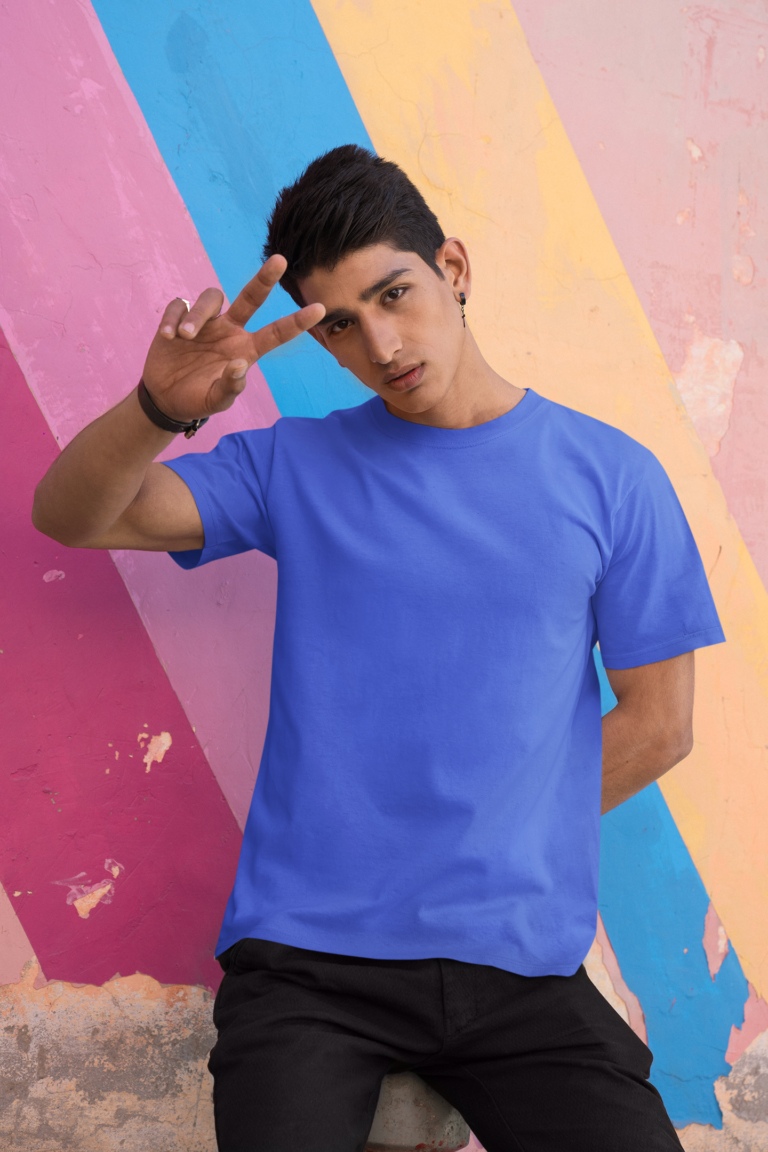
A short haircut can pair with many clothing styles. A plain round-neck T-shirt, jeans and trainers make an easy everyday outfit, while a polo and relaxed trousers add a little structure. The royal blue tee pictured here illustrates the clothing idea only. You do not need that colour, and the image is not a claim about which haircut the model wears.
For a casual office or lunch, use the dress code as your guide. A tidy haircut does not make a T-shirt formal, and a textured finish does not prevent you from wearing a jacket. Choose clothes appropriate to the setting and let the hair be one part of the whole look. Comfortable fit matters more than matching every detail to a trend label.
Before the next appointment, review three things: which parts were easy, which parts needed extra effort and whether you still like the amount of contrast. Keep the successful choices and adjust one or two details. That approach makes it easier to find your own version of the crop. You do not need to switch repeatedly between fashionable names to get a short haircut that feels current, manageable and recognisably yours.
Frequently asked questions
Are French crops and textured crops completely different?
No. The categories overlap, and a French crop can include texture. Use the terms as starting points, then discuss the fringe, top movement and sides individually. The image and your explanation are more useful than insisting on a label.
Which cut takes less styling?
That depends on your hair and the finish you choose. Ask your barber to demonstrate both a natural everyday result and a more styled version. Also separate morning effort from the appointment upkeep needed to maintain a sharp outline.
Do I have to get a skin fade?
No. Discuss the side length and transition separately from the crop. You can ask for a softer outline or more contrast according to your preference. Make clear how much scalp visibility you want before cutting starts.
Can wavy hair work with a crop?
A crop can be adapted around natural movement, but it may not resemble a straight-haired reference. Talk about the dry fringe length and how your waves settle. Choose pictures that help explain the result rather than promise an identical texture.
What if I dislike the fringe after the appointment?
Explain the specific issue to your barber: its length, direction, edge or the way it sits after drying. Ask what can be adjusted now and what needs some growth. Avoid repeatedly cutting shorter without understanding which detail is causing the problem.
More Namakool style guides
Make the look your own
Explore everyday tees, polos and casual layers at Namakool.